Showing posts with label psychological drama. Show all posts

Thursday, November 27, 2025

A Stan Is Born

Lurker (Alex Russell, 2025)

One of my favourite books is John Ronson’s The Psychopath Test. An absorbing read that provides collective examples of psychopathy within human society; including cases amongst corporate and governmental sectors. A defining constant in all the cases noted, is the lack of genuine empathy a psychopath exhibits; an obvious sign in identifying a wolf in sheep's clothing. (The smartest ones attempt to feign it, however.) Writer and director Alex Russell’s debut feature Lurker (2025), a film dealing with celebrity obsession and the infiltration of the sycophantic inner circle of an emergent pop musician, automatically brought me back to Ronson's book.

Lurker follows Matt Morning (Théodore Pellerin), a young retail clerk at a Los Angeles clothing store frequented by local celebrities. A chance encounter occurs when Oliver (Archie Madekwe), a British singer, visits and is impressed by Matt’s choice of song playing in the shop. The two strike up a friendship which leads to Matt being invited to the singer’s concert and spending time backstage with him. It is not long before Matt is doing menial chores for Oliver in his Los Angeles apartment; including catering to the singer’s sceptical entourage. Thus Russell’s drama follows Matt’s social ascent through the ranks of Oliver’s inner circle and becoming something of a celebrity himself.

In one instance, Oliver is filming a sheep for his latest music video. Noah (Daniel Zolghadri), the videographer has run out of battery power for his camera despite being certain he had packed an extra battery pack. Matt conveniently has his own camcorder and offers advice on how to shoot it and integrate it with the existing footage. This was clearly intentional sabotage by Matt, but proved beneficial for the protagonist as it elevated his social standing within Oliver’s hierarchy.

The music video itself serves as a direct metaphor between celebrity and fandom. Matt’s camcorder is mounted on the sheep which provides its perspective of Oliver; effectively satirising fans as herdlike suckers. A fitting comparison given the deification of celebrities in the modern era.

However, Jamie (Sunny Suljic), a work colleague from the clothing store, disrupts the social climb. He asks Matt if can attend one of Oliver’s parties and subsequently gains entry to the star’s circle. Jealousy arises when Jamie receives more attention than Matt. During a London concert tour, Matt’s psychopathy becomes more than evident when he injures Jamie during a photo shoot. Consequently, he is expelled from Oliver’s circle and returns to L.A. To regain his position, Matt resorts to unethical methods, including providing backstage passes and spiking the drinks of two underage girls. The after-party being unknowingly recorded with cameras installed in Oliver’s house. This situation creates a blackmail scenario where Matt exerts control over the pop star.

The power shift in the film’s final act occasionally approaches psychological thriller territory, producing genuinely tense scenes. A notable example is the scene in which Oliver enters Matt’s room to retrieve the incriminating footage on a SSD. This sequence exemplifies the strained nature of their relationship being taken to an extreme with an unexpected and awkward homoerotic wrestling scene. WTF?

A low-fi narrative exploring themes of cliques, loneliness and parasocial relationships, Lurker examines the lengths an obsessive individual would go to find a sense of belonging. While the film is not new territory, as evidenced by the 2023 film Saltburn (also featuring Archie Madekwe) which explored similar themes in the context of class, Alex Russell’s work is more nuanced and less exaggerated than Emerald Fennell’s. In contrast, Lurker is more grounded in reality and makes a parasitic individual like Matt more believable as a character existing in our world. Additionally, Matt Morning makes for a good fit as the manipulative little brother of the ghoulish Louis Bloom.

The lyrics in Oliver’s latest music video provide a contrasting perspective, illustrating the chilling conclusion that love and obsession are synonymous for the celebrity who craves adulation. This creates an unhealthy symbiotic relationship between star and fans. Consequently, much like the film’s many awkward scenes, the message lingers long after the credits roll.

Perhaps the most intentionally cringeworthy film released this year; a noteworthy achievement given Nicolas Cage’s hell in The Surfer. More significantly, it marks an impressive feature debut for writer and director Alex Russell. Primarily targeted at Gen Z with crossover appeal, Lurker is a worthy standout this year.
Thursday, February 13, 2025

The Slinging Detective

Singapore Sling (Nikos Nikolaidis, 1990)

Preceding the Greek Weird Wave movement, which rose to prominence in the late 2000s, Nikos Nikolaidis's thoroughly depraved Singapore Sling (1990) can be considered as ahead of its time. Ought to add, I've largely found Greek Weird Wave (which turned Yorgos Lanthimos into a popular name amongst the kino massive) a pretentious and farcical movement, thanks to its trademark stilted deliveries and awkward hipster humour. Singapore Sling happens to be something of an outlier in this regard, as it manages to have its own idiosyncratic charm and identity without it being eye-rollingly trying too hard. As a result, it happens to be a rewatchable entry in extreme cinema rather than a one time endurance test.

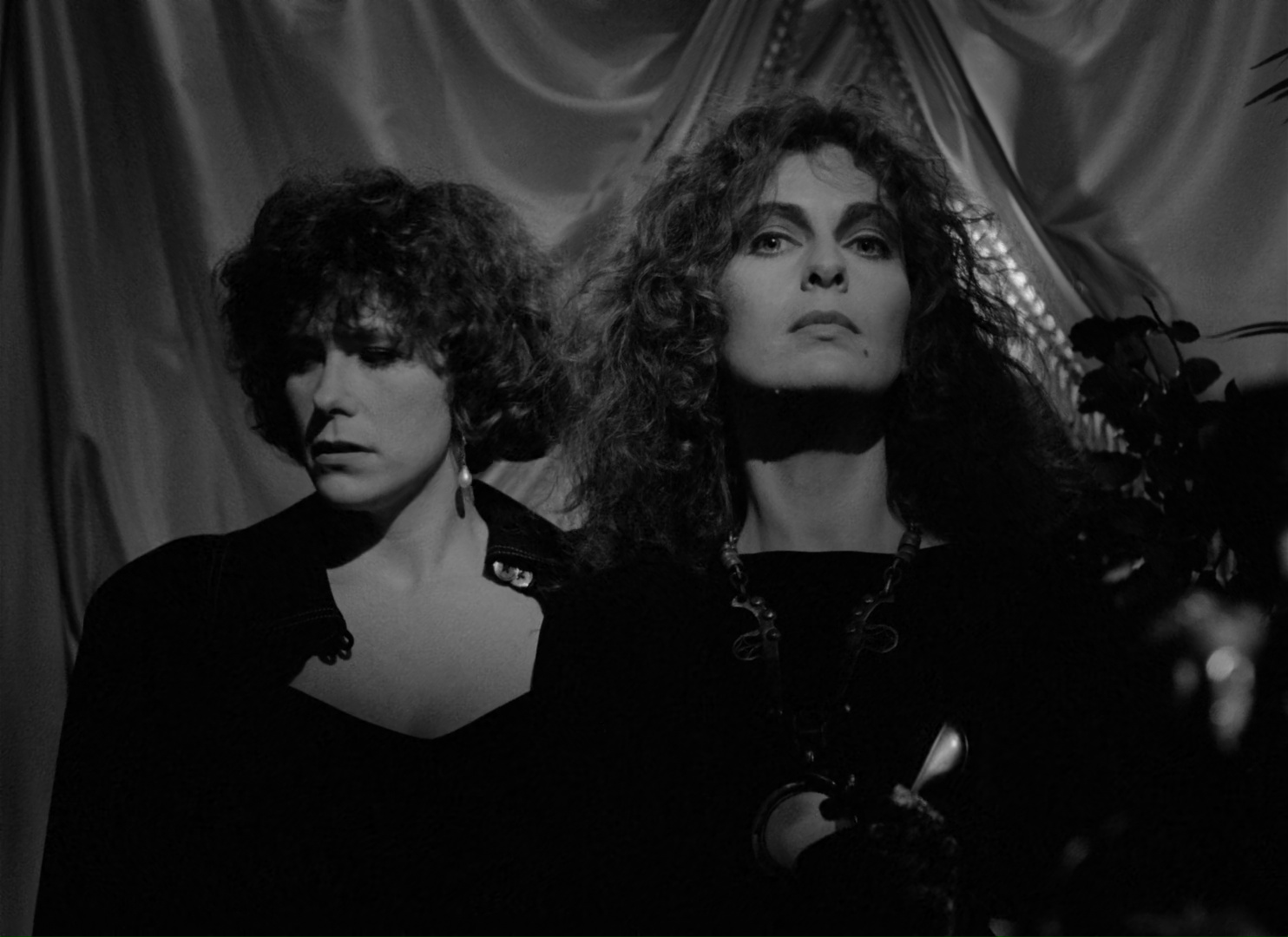
Singapore Sling, or to use the literal English translation of its original title - The Man Who Loved A Corpse, takes obvious inspiration from Otto Preminger's celebrated noir Laura (1944). Preminger's film has  Dana Andrews's private dick searching for the killer of Gene Tierney's character, before a big twist surfaces later in the movie. Nikolaidis has Singapore Sling, the eponymous, Greek detective searching for his lover Laura. The sleuth stumbles upon a bizarre mother and daughter disposing of a body during a torrential downpour, who might know something about Laura's whereabouts.

Many familiar tropes and cliches associated with film noir are prominent in the film. The most obvious is the titular character being the detective investigating the disappearance of his sweetheart. From the harsh black and white contrast lighting, to Sling's first person narration (albeit in Greek), there's a level of technical understanding for the genre's craft. Without the odd giveaway, such as a very obvious '80s looking turntable, you would be forgiven for mistaking the film as being from a much earlier era. That is of course if depraved movies of the Forties and Fifties were on par with this back then. It's what makes Singapore Sling so anachronistically abstract.

Be warned; Singapore Sling definitely falls under the extreme cinema umbrella. This is a film which isn't shy in showing numerous acts of sexual depravity like BDSM and various bodily fluids. There are wince inducing moments of vomiting during a greedy feast scene, but perhaps the film's piece de resistance is the scene involving a kiwi fruit. Without delving into any graphic detail, you'll never see the fuzzy fruit in the same way again. Ever.

What's intriguing about the film, for me at least, is the relationship between Daughter AKA Laura (Meredyth Herold) and Mother (Michele Valley). Given how intentionally unreliable and contradictory facts and details are presented, you aren't certain if the characters are related, or if it's all role play. This does add another layer to the film, which sends the mind racing into overtime attempting to make sense of the characters.

Performance wise, both Herold and Valley are superbly animated and quirky as the psycho mother and daughter. They are what makes this such a watchable film. Thanassoulis plays it lifelessly deadpan, but there's more to his character as the film progresses. He's plainly not a third wheel in the film's plot. To be fair, Singapore Sling's group psychopathy has a lot in common with Freddie Francis's absolutely stellar Mumsy, Nanny, Sonny & Girly (1970), another film that I adore involving a role playing dysfunctional family.

Definitely not for everyone and obviously one for the sickos. A technically stylish and well crafted film considering how depraved it is from the jump. It's oddly strange how various tropes and cliches associated with film noir are grafted into such a perverse art-house film. This make it all the more audacious. A  transgressive film, and one that's grown on me even more over the years.

Amazingly, Singapore Sling is available to watch for free and uncut on Nikos Nikolaidis's YouTube channel. How it hasn't been taken down by Google, I'll never know. However, I do welcome it being there for any inquisitive film fanatics daring enough to check it out. More recently, Singapore Sling got the lavish boutique Blu-Ray treatment, courtesy of Vinegar Syndrome, which I ended up purchasing for my own film library.

Monday, January 8, 2024

Lancaster Bomber

The Swimmer (Frank Perry, 1968)

Although largely unsung, we can add The Swimmer to the list of gems from 1968 that was a bumper year in cinema. Frank Perry's drama revolves around Ned Merrill, (Burt Lancaster) a middle-aged man with a bizarre obsession of wanting to make his way home by swimming his way home in the pools of his neighbours and fellow residents (regardless of whether they know him or not). Named after his wife, Ned calls it "the Lucinda river", which in turn becomes a fascinating odyssey for its protagonist and the viewer.

Adapted from John Cheever's short story, first published in The New Yorker, it's somewhat mindblowing that this unconventional and largely surreal film was picked up by a mainstream company like Columbia Pictures for distribution. Its doubly bizarre that Burt Lancaster, an actor synonymous with a tough guy on screen persona, would dive completely into this after the likes of George C. Scott and Paul Newman passed on the project. The Swimmer transformed into a personal film for Lancaster. He underwent immense physical training to get in shape for the role by putting on twenty pounds of muscle for his physique. He also ended up spending his own money to fund the last day of filming as the Horizon Pictures could not or would not spend anymore on the film. With such a troubled production which say Sydney Pollack playing an uncredited hand at directing reshoots after Frank Perry was fired from the film, you would think The Swimmer would have spelt an absolute disaster. It kind of did as it sunk without much fanfare, until it was rediscovered years later.


Despite The Swimmer's strange premise, it's an effective way in learning more about Ned during his journey home. Each one of his pool treks serves as a short story in itself, and reveal invaluable details about him. It's obvious from the very start of the film that there's something strange about Ned. The way some of his neighbours react to him seems to tell there's much more going on with Ned than we're let on. That's the beauty of the The Swimmer  – you're picking up these fragmented pieces about Ned's past and playing armchair detective. Despite being such an old film, delving deeper into Ned's journey would effectively spoil the experience. Also, The Swimmer deserves the benefit of not being ruined by anyone as it contains a superb final act with an unforgettable ending.

Don't mean to use such a clichéd description like "multi-layered", but it's wholly appropriate here: on one hand, The Swimmer poses as a psycho drama about a man's fractured past; while on the other, it's a satirical critique on the upper middle-class. The latter portrays Ned's neighbours as lazy and hungover good for nothings. While piecing together the jigsaw puzzle that is Ned's past, you're seeing him mingle with people who were once like him. The more you learn about Ned, you start to think that maybe he wasn't always such a great guy afterall; especially when he winds up visiting the home of his former mistress. There's also the distinct contrast he faces when he meets the working classes at the claustrophobically cluttered local swimming pool.

As mentioned earlier, Lancaster wasn't the first pick to play the role of Ned Merrill in The Swimmer, but it  might be one of his best performances, in my opinion. For a middle-aged actor wearing only navy blue swimming trunks for the entirety of the film, he does a stellar transformation of turning from this mildly eccentric suburbanite into a darkly disturbed individual. It's physical too, as his confident posture is  eventually subsitituted with him cowering and limping as the film progresses.  To a certain degree, Ned Merrill might come across as a spiritual precurssor to the likes of Travis Bickle and D-Fens. Personally, I interpret The Swimmer as a critique on the American Dream and on the male machismo.

Found out about the film about a decade ago when Grindhouse Releasing acquired the rights for it which was odd at the time since their catalogue contained notorious horror titles like Cannibal Holocaust (1980) and Cannibal Ferox (1981). Consequently, this stark contrast allowed for The Swimmer to earn a spot on my watch list. However, it wasn't many years later that I finally got off my arse and watched it. An absolute gem that I should have checked out much earlier, but better late than never.

Sunday, September 24, 2023

I Can Fix Him

The Passenger (Carter Smith, 2023)

It's frustrating when a talented actor like Kyle Gallner, who made me an instant fan of his after the superb Dinner in America (2021) -  Dada Debaser's film of the year, winds up in minor bit part roles for mainstream, overrated trash like Scream 5 (2022) and Smile (2022). Thankfully, Gallner has had a chance to flex his acting talents in a few indie flicks this year, and one of which is this compelling psychological thriller by Carter Smith, better known for helming the enjoyably gory plant horror The Ruins (2008).

Following a short prelude scene where an elementary school teacher is bleeding from her eye, The Passenger (2023) fast forwards to a small town burger restaurant, one that looks equally as grotty as its stale burgers, where we're introduced to our film's protagonist Randy Bradley (Johnny Berchtold). Randy is a shy and introverted young employee and is often bullied by a fellow co-worker. Life doesn't seem to be much better at home, either. On this fateful day Kyle Gallner's Benson, also a staff member at the squalid restaurant, steps out into the car park and retrieves his shot gun from his car. The result is a blood bath with Randy forced to help clean up the gory mess, along with taking a road trip as Benson's hostage.

During the course of the off screen manhunt, Benson sees Randy as a bizarre social experiment in identifying his problems and goading him into rectifying them. The Passenger is first and formost a character study into two deeply troubled individuals. Both of which having endured past childhood traumas. Throughout the few hours they have together, the film successfully displays essential insights and compelling character developments for its two lead characters. Much of the film's success can also be attributed to Berchtold and Gallner's acting talents, but Smith film has a constant threat of spontaneous violence bubbling along throughout the its run time - obviously due to the burger restaurant massacre scene at the start of the film.

Always fun when a film manages to play with the viewer's predictions and The Passenger toys with the concept that Benson might be an imaginary character in Randy's head à la Fight Club (1999). The question is raised and answered surprisngly quickly and serves as an early twist to a played out revelation. Refeshing, that it outsmarts my second-guessing.

Immensely entertaining seeing Benson, a highly volatile psycho, act as life coach therapist to Randy. In all fairness, there's a method to his madness. He successfully manages to provide closure for many of Randy's problems, it's just done so in such an extremely unorthodox manner. This really made the film such an enjoyable experience.

How ironic is it that The Passenger, a Blumhouse Production feels like an A24 film, while Talk to Me (2023/2023), an A24 film, exudes obvious Blumhouse vibes? Not that I'm complaining or anything, as I'm hugely thankful that indie gems, regardless of their origin, are rising to the top in a year when bloated mainstream productions have either been flopbusters or products of manufactured hype like the insufferable Barbenheimer media blitzkrieg.

Tuesday, April 11, 2023

Floundering Nemo

Inside (Vasilis Katsoupis, 2023)

One is the loneliest number for Willem Dafoe in his latest film, Inside (2023). I can relate, since judging by the various comments and reviews I've read, I'm probably the only one who likes the film. If you watched the trailer and expected a Michael Mann style art-heist thriller, then that's on you!

Willem Dafoe plays Nemo an artist/art thief abandoned by his accomplices after a botched theft to steal an Egon Schiele self-portrait. Trapped within a swanky and inpeneterable penthouse, he's left at the mercy of the smart home's faulty automated settings and what little food is available to keep him alive. From Willem Dafoe to Daniel Defoe, Inside is conceptually Robinson Crusoe in a high-rise appartment.

What makes the prospect of Inside so enticing is seeing Dafoe, an incredible actor synonymous with playing unhinged characters, carrying an entire film while he is trapped in a single location. The premise might not appeal to some, but it's far more appealing than the usual over-hyped Hollywood brain rot out there, that's for certain. It's also wildly entertaining watching Dafoe completely trash a penthouse apartment.

Not without its faults, Defoe's performance makes this film a mesmerising viewing experince. Watching him fall into complete despair and lose his mind, feels almost sadistically entertaining. Munching on ice from the freezer to stay hydrated and keep cool from the sweltering heat coming from the aircon, is desperately gruelling. To then hear, the fridge freezer auto play the Macarena song whenever it's left open too long, is hilarious. Nemo eventually being broken by it and finding it entertaining is on par with Dr. Yen Lo's brainwashing from The Manchurian Candidate (1962).

With the plumbing turned off, water becomes a scarce commodity, and so Nemo has to collect water from taps on a timer for the house plants and take dumps in a bath. Food is also limited, and our imprisoned protagonist eventually has to resort to eating the penthouse's tropical fish and dog food.

Starved of social interaction, Nemo observes the penthouse's CCTV as a window beyond his confines; the others are a hurt pigeon facing a similar fate outside the apartment, and a video art installation room. He becomes drawn to "Jasmine", the cleaner he desperately tried to alert. As his health and mental state deteriorate, Nemo experiences hallucinatory fantasies of both her and the penthouse's owner. These surreal scenes are welcome breaks from the obvious monotony at times.

Nemo's hope of escape from his palatial confine materialises with a tall structure created from various furniture reaching up to the apartment's skylight. It resembles a modern art sculpture. There's also his elaborate mural borne from his deteriorating mental state. A person utilising his pain and suffering to creative: a satirical take on art by Katsoupis, perhaps? There's also the scene where Nemo finds William Blake's The Marriage of Heaven and Hell in a secret room. Which is right about the time the film takes an about turn into the existential and symbolic representations of mankind's relationship with Heaven and Hell.

Biggest gripe with the film was its finale. Ambiguous endings are often a clichéd cop-out. A cheap trick employed by pretentious film makers. Their intention might have been to let the viewer fill the last piece, but it often comes across as either their lacking the necessary skill, or apparent laziness to effectively end their film with the same level of expertise with what preceeded it. Given the film's obvious spiritually symbolic final scenes, the ambiguous climax might have been intentional by Katsoupis, but it still comes across as underwhelming, regardless. Still, despite this blunder, Inside is a film where Dafoe gets to deliver a phenomenal performance, and it's completely indebted to him for being such a compelling viewing experience.