Watched the coming-of-age drama The Holdovers (2023) the other week, and other than it having me pondering how much better it would have been if it wasn't such a veritable sausage party, was how its early seventies Christmas setting, along with its prep school location, would have been far better suited in a good ol’ fashioned slasher film. This had me hitting the shelves and watching some vintage slice and dice movies. They will always be more appealing than some obvious Oscar bait. The much maligned slasher genre is chicken soup for my soul and an antithesis to the overrated shite jocked by pretentious cinéaste crowds.
However, this resurrects an age old issue concerning certain characters from this genre: various players being vastly better than the film's protagonist. They deserved the mantle of final girl in their respective films. Here are a bunch of your host's fave characters, in no order of preference, who were robbed of life before their time:
Never forget the reason a bunch of troublesome teens in a halfway house became victims in the controversial Jason imposter sequel all stemmed from a chocolate bar. Vi, the new wave goth deserved to live way more than some-other-bloke-who-wasn't-Corey Feldman playing Tommy Jarvis. Her quintessential eighties goth made her a standout. Her robot dance was the best dance in the franchise after Jimmy "Jimbo" Mortimer's from the previous film.
It's remarkable how Lucio Fulci, nicknamed the Godfather of Gore, managed to make a relatively bloodless giallo/slasher with Murder Rock. This sleazy film, inspired by Fame and Flash Dance, has one of the most flexible characters, Janice, who puts Jennifer Beals' exotic dance to shame with her lurid performance. Fulci obviously fancied her since she was given an off-screen death. How rare is that? She deserved to live after that dance.
The complete character assassination of Rachel by the film's hack writers is a bigger crime done to her than what Big Mike did. A smart, young and likeable woman in Halloween 4: The Return of Michael Myers (1988), who earnt final girl status only to be turned into a brainless bimbo second time around. She merely served as cannon fodder in the first twenty minutes. A typical example as to why slasher survivors should never return in the sequel. Word to Roland Kincaid!
The real lovebirds of Valentine Bluff were Patty and Hollis in the original canuck slasher, My Bloody Valentine. Sadly, we got a daytime soap operal level love triangle instead with T.J and Axel fighting over the most useless and unworthy final girl in slasher history - Sarah Mercer. Unfortunately, no one else realised this, thus our working-class love birds ended up like a canaries when they ventured below Hanniger mine for a Valentine's Day party. Romance is truly dead.
A Nightmare on Elm Street 3: Dream Warriors (1987)
Obvious hot take, but I would have picked Taryn over Kristen as final girl in the third Elm Street outing. Whether you disagree or not, it makes no difference 'cause Patricia Arquette didn't return in the fourth film, and the character merely became a stepping stone for Alice Johnson to be the final girl for the fourth and fifth films. How much better would it have been if Taryn got her chance to shine in those films? Both brave and heroic, the former drug addict deserved her chance to shine.
Not many women would give a hulking, undead, homicidal maniac with a machete the kiss of life, but that's what Kia did to save Jason Voorhees from drowning in his nightmare slumber. What thanks does she get for this memorable gesture? A machete slap so hard she ends up flying across the screen and into a tree. What kind of a message are we sending to aspiring final girls everywhere when Kia dies after putting in so much work while Lori Campbell survives on fake looking boobs alone?
Throughout Terrifier our young heroine went through so much physically and emotionally, even a complete bastard would be rooting for her. Sadly, it wasn't to be as Art the Clown emptied an entire round of bullets into her head. The sequel might have engineered one of the most unique and interesting final girls in decades, but Tara's death is still a gut-wrencher for your host. Tara deserved to make it to the end credits instead of her sister.
How could Barb be tragically killed off after displaying all that courage and camaraderie for her fellow Pi Kappa Sigma sisters? Beneath that sassy exterior was a vulnerable woman in a world of emotional hurt. She put her sisters first, and I can respect that! To be fair, not even the film's actual final girl, Jessica, made it as Billy was revealed to be in the house at the end of the film. A downbeat ending, but Barb's death scene still always hits the hardest for me.
Mean girls are often a secondary villain in the slasher genre, but every now and then some real ice queens come along who are even more endearing than the actual final girl of the film. Jessica is one of them; so down right bitchy, the O.G. film's meanie, Vicki, pales in comparison - a remarkable feat, to be honest. Her callous remarks are more cold-blooded than the killer. Not only that, but she even manages to outshine a shotgun-wielding Carrie Fisher playing the house mother in the film.
Hitchcock's Psycho (1960) may have been the first Hollywood film to feature an on-screen toilet, but it wasn't until the third instalment where it had a kill on it. Common courtesy ought to dictate that any potential slasher victim should at least finish their business while on the khazi. At least Demon got off the crapper in Friday the 13th Part V after them damn enchiladas. Should Patsy have made it to final girl status? Nope, but she deseverd some dignity in taking a piss undisturbed, though.
This early noughties gem packed a powerful punch, and still does whenever I think about it. This Big Brother inspired chiller had a similar premise to the Hostel films and The Den, in that our cast are thinking they're competing on a reality show, but are unknowingly in a snuff show. For the most part, this is a psychological thriller before it truly descends into real horror territory. Emma is set up as a traditional final girl in the film, but is cruelly never even given the chance to shine.
Equally perplexed how the latest films in the Scream franchise has resurrected Kirby Reed and only a few people are asking the important question: how? Onto alternative choice - Tatum Riley. The original BF but not forever, but you've seen enough slasher films to wonder if she might be another Ann Thomerson. In any case, Tatum was the humourous lass who makes me now wish she made it instead of Sidney Prescott thanks to all the sequels. Her death made me scared of garage doors ever since.
Friday the 13th Part VIII: Jason Takes Manhattan (1989)
It was bad enough that two thirds of the film was set on a cruise boat (in Crystal Lake?), but the biggest crimes were killing Eve and the utterly bland Rennie Wickman being the final girl. She may not have had crazy visions of a young Jason Voorhees, but real heads know Eve should have been the final girl for being the nicest character of the lot. Sadly, she had no chance against a teleporting J.V, and therefore, it was murder on the dancefloor. In hindsight, I suppose she got off lightly via strangulation.
Subversion in full effect. On paper, Lorraine personified all the characteristics and virtues of the quintessential final girl. Today, her death serves as a symbol that little goody shoes girls are part of the body count. Lorraine became a victim of modern slasher trends, where the modern final girl appears to have psychotic traits and/or links with the film's antagonist. We've actually reached the point where the heroine is a psychotic killer. Lorraine was born in the wrong era.
This faux-American slasher (filmed in Surrey, England) has some of your hosts fave kills in the genre. Our party of former high school bullies obviously face their comeuppances while at their high school reunion. But how are you going to kill off an absolute cult siren like Caroline Munro in a slasher film (even if she was a complicit to the killer's back story) when the utterly grim Maniac (1980) had the good grace to let her survive? For shame.
The only real saving grace in what's essentially a Carrie vs. Jason film is the secondary antagonist, Melissa Paur. Such an unforgettable snob, she was practically a female Steff McKee. Way more fun on screen compared to our troubled telekinetic heroine, Tina Shepherd. The grisly deaths were famously butchered by the MPAA, but Melissa's bitchy antics made her an unforgettable favourite. Top 10 Friday the 13th character, in my opinion.
The cheerleading sloshpot and self appointed queen bee at Camp Rolling Hills was constantly at loggerheads with the psychopathic councillor, Angela Baker. Ally met her demise by being stabbed in the back by Angela and then shoved down a festering outhouse toilet. Perhaps one of the nastier deaths on the list here, as she was drowned in bodily waste and covered in leeches in the film. Another memorable secondary antagonist who exceeded in appeal over the film's final girl - Molly Nagle.
Blondes tend to have the worst luck in slasher films; they're either the final girl's slutty friend, or the secondary antagonist. Too bad our Croaker Beauty Pageant Queen was glossed over as the survivor for girl-next-door brunette, Julie James, as she was another superior character. She put up a decent fight, but croaked while the band played on. Can't say I was ever a big fan of the IKWYDLS films, but Helen was definitely amongst the more memorable characters from the nineties slasher revival.
Not sure whether Jenna's death was a throwback to Annie Phillips being unexpectedly bumped off in the O.G film, since both were set-up as film protagonists. Jenna's death came as a legitimate surprise for me, as I didn't expect a switcheroo to occur after Whitney Miller was found in Jason’s lair. One of those rare times where I wrongly predicted Whitney being the penultimate victim. Fate's way of punishing Jenna for hooking up with a garbage human being like Trent Sutton.
Whether you dig the producers cut, the death of Jamie Lloyd and the weird cult centred around The Curse of Thorn, wasn't my thing. Jamie's cycle of final girl to masked maniac was wholly ruined by killing off the successor to Haddonfield's boogeyman. Jamie being pregnant with Michael's offspring (he's her uncle!) made absolutely no sense. So bad, you can understand why Halloween H20 (1997) skipped the Jamie Lloyd era. Eventually it was rebooted too and created an even bigger mess.
Final Thoughts:
Based on my observations, Heathers (1988) level mean girls from yesteryear are more charming and less eye-rolling than the current crop of impervious, modern day final girls. Call it some psychological jargon like post-feminist, Mary Sue fatigue in modern horror, but it's seriously bizarre how some of these memorable secondary antagonists listed above are less grating than today’s final girls, like the insufferable Riley McKendry in the Hellraiser (2022) reboot.
Some of today’s final girls, like Maxine in X (2022) and Sam from the recent Scream (2022 - 2023) films exhibit maniac qualities. These characters would have very likely been villains akin to Brenda Bates from Urban Legend (1998) if they were around in a previous era.
Not sure if the not final girls I listed above were always seen in this vein, but they're certainly characters who have grown in popularity over the years.. Perhaps, the mean girls have ironically become the new template for current slasher heroines; where the trend is for them to behave like antagonists, while the more virtuous ladies, who never made it to final girl status, have fallen by the wayside and are now out of favour with current day audiences
Ironically, the quintessential maniac psycho did get the final girl in the end - they're just one and the same person today.
There's nothing out right now that I'm really in a rush to see (except, maybe Baz Luhrmann's Elvis), so it's a good time to take a breather and go over a few films I managed to watch for the first time this year that really impressed me. I slept on these movies too long like Ash Williams in the original Army of Darkness (1992) ending. Therefore, it's time to make amends. Ideally, they deserve a more in-depth look, but that's way too time consuming, so here is a brief run down with my thoughts on them:
Things to Come (William Caemeron Menzies, 1936)
Adapted from H.G. Wells' novel The Shape of Things to Come, this gem of British science fiction was startling accurate with the prediction of another world war at the time. The decades which follow show a catastrophic scale of human destruction.
This Gun for Hire (Frank Tuttle, 1942)
Along with Humphrey Bogart, Alain Delon and Peter Falk, Alan Ladd joins the list of trenchcoat cool. This film noir triumph has Ladd playing a hitman with enough repressed anger in him, you would think he would explode like Yaphet Kotto in Live and Let Die (1973). Amazing chemistry between Alan Ladd and Veronica Lake that it's little wonder they were paired together in a further three films.
Riot in Cell Block 11 (Don Siegel, 1954)
This might be one of the most anti-prison movies I've watched. Siegel blends documentary style footage with fever-pitch tension which results in a gritty prison riot tale. The argument for better conditions seems to be just as relevant today as it was back then. I'm a sucker for prison flicks and it makes me feel even more of a sucker for only just discovering this hard-boiled movie this late.
Passport to Shame (Alvin Rakoff, 1958)
This sordid tale of exploitation and manipulation must have been considered very shocking upon its release. Eddie Constantine and Odile Versois are the latest couple to be caught into the web of deceit by gangster pimp Herbert Lom. Somewhat baffled by how much Lom is drawn to Versois while not giving a damn about a stone cold fox like Diana Dors. Tame by today's standards, it's still a fascinating look at the sleazy side of London in the fifties. Look out for an uncredited Michael Caine cameo.
The Servant (Joseph Losey, 1963)
A deeply, subversive pschological drama which goes beyond the typical social class commentary at the start of the film and derails into a halucinatory conclusion of power and dependancy. Dirk Bogarde and James Fox are superb in this. Kicking myself for discovering this film so late and would probably have ignrored it even longer if not for randomly stumbling upon an article on Edgar Wright's list of films which inspired his film Last Night in Soho (2021).
Malpertuis (Harry Kümel, 1971)
Realistically, a film this hard to find (for me at least), really shouldn't qualify here since I have actively sought it out in the past. Directed by Harry Kümel, thesame director who gave us the stylish Daughters of Darkness (1971), this horror fantasy is like a feverish dream, where you're never totally sure what on earth is going on. That might deter some individuals, but it's an intriguing film with enough mesmerising scenes, including Orson Welles barking orders on his death bed to his fam, which keeps a film head like me enthralled throughout.
Malatesta's Carnival of Blood (Christopher Speeth, 1973)
File this under "films I would have discovered earlier if I didn't have to dedicate years of my life trawling through Stephen Thrower's breezeblock of a coffee table tome, 'Nightmare USA' just to find out about it." We're here now anyway. Malatesta's Carnival of Blood is a wonderful film which feels like something George A. Romero would have helmed had he peeped Gloria Katz and Willard Huyck's sleeper classic, Messiah of Evil (1973) while on acid. Been burnt one too many times by z-grade horror from that era, but Christopher Speeth's one and only feature film is a veritable diamond in the rough.
Terminal Island (Stephanie Rothman, 1973)
Covered Terminal Island already, but it's worth repeating just how ahead of its time it was. A real shame it's lumped in with the W.i.P films from that era; since it's a subgenre with a very negative reputation. Few film makers are ever given complete carte blanche in realising what they want and Stephanie Rothman was sadly not one of them, but at least this film feels like an amicable comprimise, in my opinion. On a positive note, at least her films are seen in a more positive light, with a renewed retrospective today.
Black Caesar (Larry Cohen, 1973)
Three reasons why Black Caesar rocks so hard for me: it equally sets the template and formula for the onset of rapsploitation flicks that would come along later like Scarface (1983) did; it's blessed with a classic soundtrack by the legendary James Brown; and last, but not least, Fred Williamson exudes the very definition of cool in this film, but carrying a Mauser pistol like da gawd Silence is ice cold badassery.
The Tough Ones (Umberto Lenzi, 1976)
Lenzi's films are usually very hit and miss for me, but the poliziotteschi subgenre appears to be his true calling. Even a desensitised individual like myself has to give The Tough Ones the Dada Debaser seal of approval for ultra violence. It's already an ultimate selling point with Tomas Milian as a hunchback psycho in A.C. Milan colours with a bodycount like Prince, but then you've got Poundland Franco Nero, Maurizio Merli handing out instant justice like he's simultaneously possessed by John Wayne, Charles Bronson and Clint Eastwood. The best poliziotteschi I've seen since Almost Human (1974), and glad I finally caught it.
Angst (Gerald Kargl, 1983)
Shout out to the brother from a Danish mother, CQ for putting me onto this movie back in the day. Regrettably, it took about ten or so years before I finally got off my arse and watched it. This Austrian serial killer drama is an uncomprimising and difficult film to watch. The audience is given a ringside seat as the film's lead, the serial killer K, is released from prison and wreaks sadistic horror upon a poor unsuspecting family. Angst is up there with John McNaughton's Henry: Portrait of a Serial Killer (1986), and I wouldn't be surprised if it inspired the infamous home invasion sequence. A very tough film to watch, but a superb one, nonetheless.
No doubt there will be further discoveries to come along, so I'll probably do a follow-up post near the end of the year.
Professional criticism holds so much weight in its assessment of various formats of creative work that it occasionally results in stealing the thunder of whatever they are reviewing. This often results with critics being fallible to their egotistical pomposity. Thus, it all makes for a great premise of delicious revenge from a scorned thespian, Edward Lionheart. After being passed up for a Critics Circle award, it compels Lioneheart to exact gruesome re-enacments from Shakespearean plays on his detractors for ridiculing him.
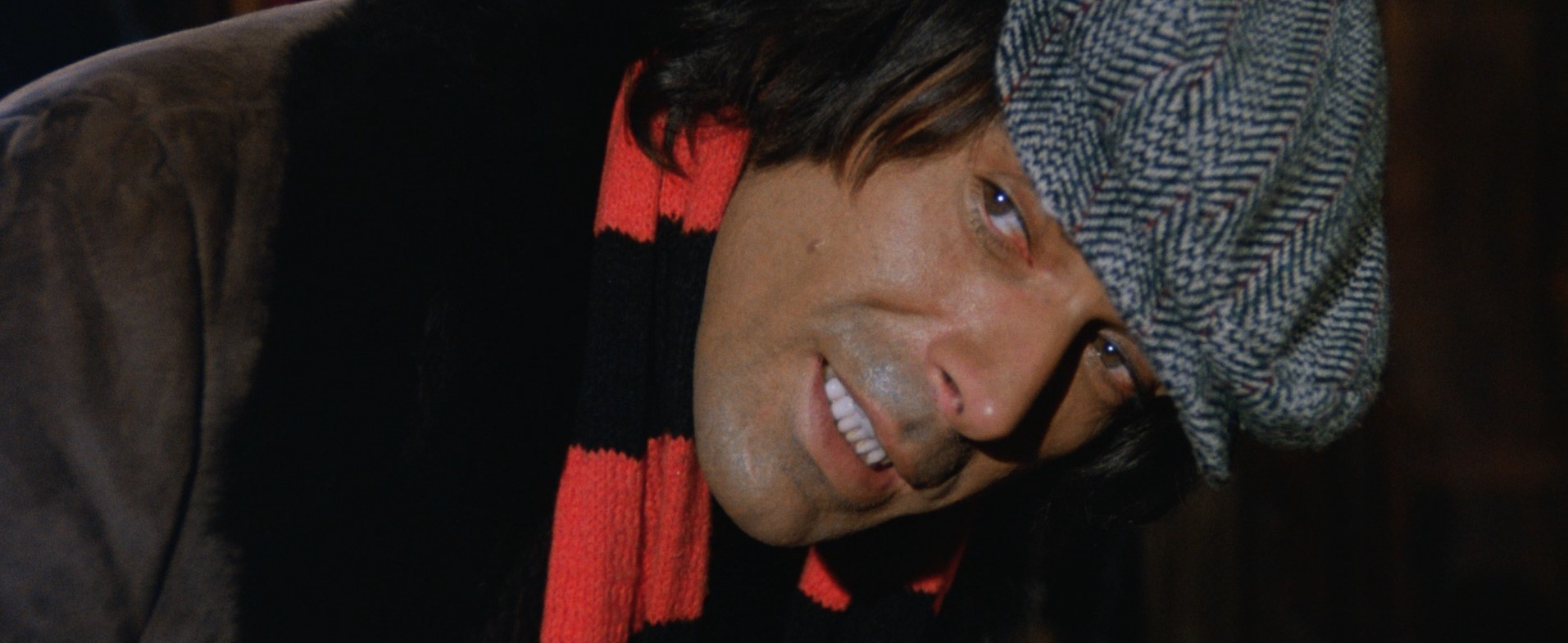
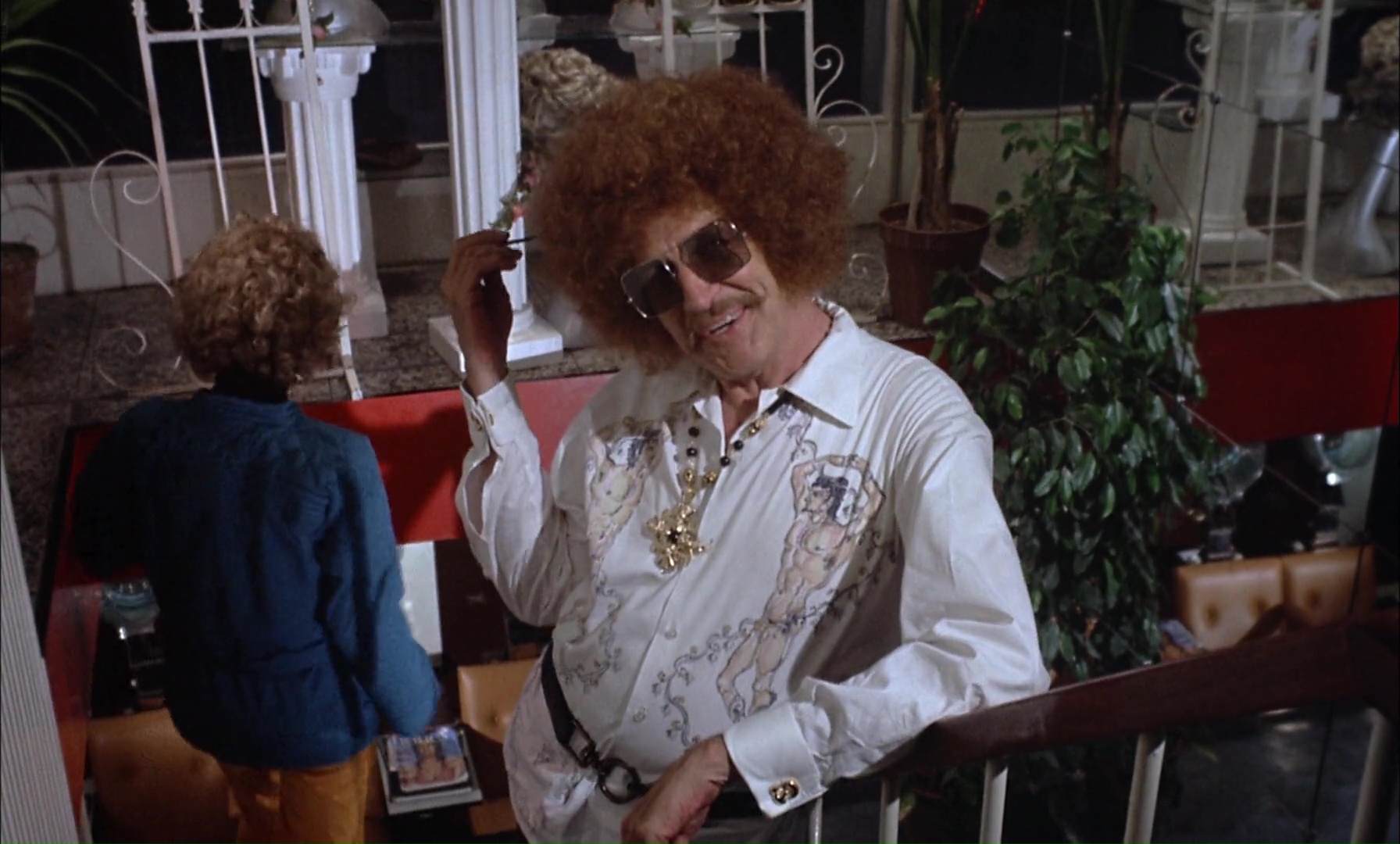
If ever a film role was tailor made for an actor then genre legend Vincent Price as Lionheart would undoubtedly be a prime example. As great as they are, both Dr. Phibes films feel like rough draft precurssors to what the "Prince of Menace" would deliver in Theatre of Blood. Price relishes the opportunity to flex his acting prowess via providing a colourful array of characters; ranging from Shakespearean creations to other disguises in luring his gullible victims; a personal favourite is the distinctively camp, Bob Ross looking hairdresser, Butch. Always cracks me up seeing Price resorting to miscellaneous disguises and accents to exact his revenge over his enemies. One such example is him hiding in a large wooden chest for who knows how long with his accomplice daughter, Edwina (Diana Rigg), before performing a surgical decapitation on one of his sleeping foes, the hilariously named Horace Sprout (Arthur Lowe). It's a disturbing set-up, aided with a hilarious medical drama style soundtrack in the background, which exhibits the fine balance of getting a horror comedy right.
The supporting cast are a recognisable troupe of British stage and screen and lend plentiful entertainment value even whenever Price isn't sharing a scene with them. Worth adding that Theatre of Blood was where Vince had a real life affair with the actress Coral Browne which resulted in the pair getting hitched the following year. With the exception of Price's Lionheart, Ian Hendry's Peregrin Devlin and Diana Rigg's Edwina Lionheart, most of the characters are portrayed as completely cartoonish imbeciles. This makes it all incredibly delightful viewing for folks like myself who watched this at a young age and seeing such notable actors having fun with their roles. There's also Lionheart's oddly terrifying mob of meths drinkers who succour with his plans. Can't overstate enough just how moronic these critics are when they fail to notice the dishevelled appearances of a drunken collective disguised as distinguished wine connoisseurs, or a professional film crew, along with Lionheart's ridiculous concealments until it's far too late. Special mention to both Diana Dors, Eric Sykes and Meredith Merridew's pooches George and Georgina for being caught in the crossfire of Lionheart's killing spree.
Hickox manages to deliver a plethora of fantastic scenes executed with such comedic perfection from his cast, that you can't help but laugh at even some of the most gruesome moments in the film. The level of thought and wit involved which range from: the intricate enticement and kill scenes which refer to various scenes from the bard, while exploiting the various flaws and quirks of the prospective victim (obvious inspiration for the Saw franchise, in my humble opinion); the forshadowing of various events, e.g, Horace Sprout scratching his neck at George Maxwell's funeral; and the call signs Horatio, Fortinbras and Hamlet, exchanged between Devlin and the police. These details all add up to a ridiculously entertaining viewing experience.
Worth considering that the film was released in the same year as some heavy hitters in horror cinema such as The Wicker Man, Don't Look Now and The Exorcist, which ironically has mostly left it ignored in a similar vein to Edward Lionheart. That's changed somewhat in recent years, since the film recently filled a slot in Time Out's 100 Best British Movies list - albeit a ridiculously low rank, but it's there nonetheless. Will it ever be placed on the same pedestal as those other '73 classics by today's critics? It's doubtful, but that just goes to show you that Edward Lionheart's oeuvre was still a a work in progress.
Kind of ironic how what's arguably the greatest Australian film ever happens to be directed by Ted Kotcheff, a Canadian film maker, while its main actors are a couple of English pommies - Gary Bond and Donald Pleasence. This dark psychological drama, revolves around the lost weekend of John Grant (Bond), a school teacher working in the sun-scorched Australian outback. Grant isn't too happy working in such a remote location, as he feels both physically and intellectually stifled by the region and its working class inhabitants. Matters get from bad to worse for him when he unfortuanately gambles away all his money, at a mining city known as Bundanyabba, AKA The Yabba, while on his journey to meet his girlfriend in Sydney.
What's particularly great about Wake in Fright is how Grant's spiralling descent into hell plays out like a series of mini adventures, as he encounters a series of colourful characters and illuminating events along the way. This almost makes Grant's escapade seem somewhat whimsical. Especially fond of The Yabba's towering lawman, Jock, played by Chips Rafferty. There's a subliminal battle between the pair, as beneath the surface of aggresive social hospitality, Jock despises Grant's intellectual snobbery and relishes in Grant's declining mental and physical state, throughout their subsequent encounters. Kotcheff claims Rafferty refused to drink non-alcoholic beer like the rest of the cast, and drank the actual amber nectar for the sake of authenticity. Kotcheff claims that Rafferty was neckin' down around thirty pints a day. Strewth!
The fictional Bundanyabba is actually Broken Hill, in New South Wales in real life. It's a region which was also used as a location for other Aussie film classics such as Mad Max 2 (1981) and Razorback(1984), not to mention the afternoon soap opera, The Flying Doctors (1986-1992). Much like Fulci's representation of New York City in The New York Ripper (1982), Kotcheff's realisation of daily life in The Yabba appears just as repressive and almost comes across like a character in itself. Water isn't fit for human consumption, hence alcohol is the main staple for its working class population. This booze culture is what alienates Grant at first, so it becomes fitting when he befriends the alcoholic Doc Tydon, a medical professional in exile from urban society. Drinking in The Yabba is the social norm, hence Doc can work and be the pillar of the community, while keeping his disease hidden.
The film is mired with some controversy as it shows the depiction of wild kangroos being sadistically hunted by Grant, Doc and a couple of rowdy lowts. It appears exploitative to some, but Kotcheff filmed a real culling he was privvy to and edited it in with his cast. That's way less reprehensible in comparison to the unsavoury practices going on with the burgeoning Italian jungle horror scene at the time. Credit to Anthony Buckley's editing for making one scene where Grant repeatedly stabs a poor kangaroo seem so disturbingly realistic. Even for an extreme movie veteran like myself, it's still remarkably unpleasant to watch. There's also the scene where Doc rapes Grant, which culminates in the latter's sanity going from bad to worse. Grant's nightmare becomes inescapable as he appears destined to wonder The Yabba broken and lost.
Kotcheff's Wake in Fright is one of those immersive films where you're immediately contemplating a hot shower after the end credits. You can almost feel the unpleasant taint of sweat and alcohol on your body. No matter how harrowing, for a film to deliver such an immersive experience, it's to be applauded. It's a major reason why this film is a personal favourite of mine from the seventies and the most Sam Peckinpah film Sam Peckinpah never made. The competency in capturing the male psyche with such aplomb, while simultaneously addressing both intellectual and class divisions is to be applauded. Fifty years later, it still delivers and doesn't feel dated at all. The film spawned a 2017 mini-series which I hardly even knew existed. Kotcheff went on to revisit the male psyche the following decade with the Sylvester Stallone blockbuster, First Blood (1982), a classic in its own right.
Much like having the right wine with your meal, the same applies with the type of movie you watch with your partner. She wants to see the new J. Lo at the local multiplex; you want to cotch at home and check out that Ebola Syndrome 4K you copped before last Christmas. A compromise is therefore in order.
Below is a list of one hundred mostly unconventional movies, that for me at least, have a far more evocative and what I would define as romantic than the usual dross that's churned out to the masses, or listed by your typical clickbait reliant filmsites. Much like a venn diagram there has to be an overlap of commonality somewhere for both parties involved:
Dada Debaser's 100 Alternative Valentine's Day Movies
Realised two things while compiling this list: erotic vampire tales (particularly those based on Sheridan Le Fanu's Carmilla) and psychos in love, are two themes that have been long time stablemates in my viewing habits.
Wanted to include Tony Scott's The Hunger (1983) in there as it was perfect for the list, but True Romance unquestionably trumps it. Also, Scott's reusing of The Flower Duet from Delibes' opera Lakmé has far more impact in True Romance than it orginally did in The Hunger.
It might be one of the better golden age slashers, but George Mihalka's My Bloody Valentine (1981) has one of my least favourite love triangles in cinema (and one of the least likeable final girls, for that matter). That's why it never made my list.
"I can feel it inside, I can't explain how it feels All I know is that I'll never dish another raw deal Playing make believe pretending that I'm true Holding in my laugh as I say that I love you"
Managed to catch this film just recently and I thought this would be a worthy follow-up to my previous appreciation post for Bruno Canfora's heavenly slice of soundtrack funk, Dirty Gang.
Truth be told, any film that reunites Umberto Lenzi with both Tomas Milian and Henry Silva again after the insanity of Almost Human (1974), is going to make it on my must see list. That film still packs a punch, even to this day. Here, Free Hand for a Tough Cop doesn't reach the sadistic highs as the aforementioned, although, it is a Lenzi film, so it's still going to deliver something hilariously problematic, regardless.
Lenzi is way more playful with this one in comparison to some of his other filmography. We're greeted by a spaghetti western style intro, replete with a desert setting during the opening credits, which had me thinking I was perhaps watching the wrong movie; until the camera pans back and it's a movie being watched in a prison. There's also a scene later on in the film which features an old school cinema with film posters of Le Cercle Rouge (1970) and Salon Kitty (1976), which had me buggin' out and wishing for my local cinema to be as cool as that.
Silva's role reversal as a villain comes in a particularly memorable fashion when he yells at a sobbing and severely sick little girl he's kidnapped with the line, "shut up, bitch", which is cold-bloodedly brutal to hear being uttered to someone so young and innocent. I only wish he was featured more in the film, since he's hardly in it, until he is turns up in the inevitable finale. Milian owns the film as the antihero Monezza, AKA 'Garbage Can', with his Kevin Keegan wig and black eyeliner. Been on a Milian binge lately and I definitely appreciate his unique caricatures; the most striking looking being hunchback psycho in A.C. Milan colours, Moretto. Not a fan of the hero cop in Free Hand for a Tough Cop, however. Just find Claudio Cassinelli a flat actor in general. Seen him in a bunch of Italian genre movies and I barely remember him in anything. His performance felt flat, considering the plot had him in a temporary alliance with a group of villains raping and murdering their way to get to another group of villains; you would expect more anger and revolsion from his character.
Think I know why only a 7" single was released as the only soundtrack for this film, since it's on repeat for much of the film's running time, or at least a variation of the theme. I can appreciate that.
Biggest gripe was Nicoletta Machiavelli. First laid eyes on her many years ago in Sergio Corbucci's Navajo Joe (1966), the one with Burt Reynolds as a Native American in a spaghetti western. The real highlight for me was Machiavelli looking absolutely beautiful. She looks a bit older in this film, but still stunning, as Silva's gangster moll. Not sure if Lenzi was still playing games with the audience, but pulling the wig off Machiavelli, revealing an ultra short hairdo which reminded me of Kenneth William's Julius Caesar hairdo from Carry on Cleo (1964) pissed me right off; to the extent the film lost put a dampener in my interest for the film. Sure, that sounds terribly superficial, but in the same week a mate of mine shared a recent pic on WhatsApp of Bridget Fonda, I've been offguard since then and this felt like a punch in the gut. Really hoping one of the boutique labels pick up Machiavelli's film lead in Gian Andrea's western, Garter Colt (1968); that's the one I really want to watch. Unfortunately, it's very hard to find, but you can watch a blurry YouTube ripped video with terrible English captions. I refuse to watch it, however.
Other than all that, Free Hand for a Tough Cop is a fairly decent film, overall. Not one of Lenzi's best, nor is it his worst. Just a shame everything felt overshadowed by Machiavelli's terrible barnet. Should have paid more attention to the reveal disclosed in the film's Italian only trailer:
Free Hand for a Tough Cop (Original Trailer)
(Umberto Lenzi, 1977)
Dada Debaser Bonus:
Managed to find an old YouTube video from back in the day that I thought got deleted. It's one of those fan vids, which usually makes me cringe, but I would allow it, as it's the only decent video around with Nicoletta Machiavelli from Garter Colt and the Morricone theme from Revolver (1973) surprisingly compliments it:
It's fair to say the swingin' sixties was entering a seismic comedown in 1968, as represented by a wave of downbeat films like, Rosemary's Baby, Night of the Living Dead and Planet of the Apes. Across the continent, the spaghetti western genre was already in full stride, approaching critical peak with a string of personal faves, If You Meet Sartana Pray For Death, Kill Them All And Come Back Alone and of course, Sergio Leone's epiccinemagasmOnce Upon A Time In The West. The genre itself had breathed new life into a tired old format by deconstructing familiar archetypal figures and values into much grayer areas. It was the era of the antihero. Amongst those antiheroes was Sergio Corbucci's mute protagonist Silence, featured in his snow-swept, doomer classic The Great Silence.
Casting prolific French actor Jean-Louis Trintignant as the titular antihero, appeared to be an intentional masterstroke, since his lack of knowing the native lingo forced him to play out the role as a mute. This let Tritignant show off his acting prowess with some superb facial acting. Visually speaking, of all the most recognisable characters from the spaghetti western genre, Silence is definitely up there, since his dark winter clobber are in stark contrast to the lighter clothing of his peers. No idea what that hairy monstrosity which is sprouting from beneath his heavy black coat is, but it looks like it's the same material as Pete Burns' gorilla fur coat, making him appear all the more stiking. What's easily the most identifiable item related to Silence, is his ultra cool Mauser C96, replete with its innovative gun holster, that also serves as a shoulder rest. Love the design of this semi-automatic pistol, and it actually dates itself correctly with the film's 1898 setting.
Corbucci didn't drop the ball with his supporting cast of actors, either; hiring an enviable league of spaghetti western veterans, ranging from Frank Wolff, Luigi Pistilli, Mario Brega, and of course arthouse and trash madman Klaus Kinski; as the film's major villain Tigrero (Loco, to the English dub headz). Venetta McGee also appears in one of her earliest roles, before even Blacula (1972), as Pauline the wronged woman, who hires Silence to exact her revenge.
The film is remarkably bleak throughout its run time, with the exception of two scenes: Gideon (Wolff) and Silence's bonding over some friendly target shooting; and Silence and Pauline's love scene, before everything goes to hell. I'm particularly fond and appreciative of the former scene, largely due to seeing our two sharpshooters take a brief respite from Snow Hill's doom and gloom, and have some fun for a bit. I also consider it fairly important, since we're seeing these two men represent a mindset that's completely alien to the rest of the film's male characters - a code of honour. It's this absence of any moral decency that makes Kinski's Tigrero one of the most compelling villains he's played, and he's played a hell of a lot of memorable villains. Corbucci's film subverts familiar tropes and cliches, and one of them is having the film's bad guys - Trigreo and his clique of bounty hunters, on the right side of the law. Another, is its take on capitalism, and how the amoral prosper from it, while the less fortunate are completely expendable.
Much like Corbucci's classic Django (1966), location plays an integral part in his film. Here, he swaps out the mud clogged town for knee deep snow, where Tigrero keeps his corpse bounties buried to remain fresh. Allegedly, Corbucci opted for snow this time around as he fancied a ski vacation in the Italian Dolomites. True or not, the location worked wonders as it helped cement the overall tone of the film. Much like Silence's iconic look, the location is also in stark contrast to many of its peers. Aside from the stetsons, you could almost be forgiven for mistaking it as David Lean's Doctor Zhivago (1965) - even Pistilli's character Pollicut is rockin' a ushanka. Hardly a coincidence that Tarantino was inspired heavily by the snow swept scenery of The Great Silence, as its evident in both of his westerns - Django Unchained (2012) and The Hateful Eight (2015).
Soundtrack duties were put in safe capable handswith il maestro, Ennio Morricone handling the music. His compositions are way more nunanced than some of his other western soundtracks produced around the same time. This feels way more melancholic and subtle, but still of a high standard. Morricone even has flourishes of the avant-garde by incorporating more exotic sounds, like sitar strings. Big fan of both the angelic harmonies from the main theme and the rousing Barbara E Tagliente with its quintessential Morricone style guitar riff.
Ought to come clean and reveal I always find myself holding back the feels on this one, especially the film's sobering finale. Much like me watching The Great Escape (1963) and wishing for Steve McQueen's Hilts to make it over the barbwire fence on his motorbike, I find myself wishing Silence takes down Trigrero and his band of killers like a true badass, and then rides off into the sunset. Alas, there isn't a coffin containing a gatling gun here to save the day. It was never meant to be. Silence walks to the saloon with the knowledge of his impending fate. We're presented with the shockingly brutal demise of our film's protagonist; along with his love interest and a grip of townsfolk butchered in cold blood. Daybreak hits and Trigrero and the rest of his mob leave the town triumphant. Worth noting that Corbucci did have the forsight in predicting the possible flack he would receive for his downbeat ending and shot a happier alternative; which sadly does not work at all, and really undermines the film's original submersive intention. Poncey film critics might interpret the film's ending completely different to me, but I see the change from night to day as a metaphor for the oncoming twentieth century; honour, as represented by gunfighters like Gideon and Silence is a trait from a bygone time, while the early dawn rays of the sun represent a bountiful era for greedy and ruthless men like Tigrero.
Worth pointing out that The Great Silence, or as film maker and ex-Moviedrome presenter Alex Cox calls it (and approximately sixty million Italians), Il grande silenzio, could be seen as a predecessor and purveyor of the intense damage and destruction felt by various film protagonists evident in seventies and early eighties cinema - particularly, within the New Hollywood scene. Way too young to go into it with any real first hand knowledge, but I see The Great Silence and its pessimistic ilk as part of a symptomatic legacy attributed to all the social and political upheavel around the globe at that time; a mass existential crisis, if you will. Feel like I've rambled on about this film way too much, but it's worth it. All armchair analysis aside, The Great Silence is one of the greatest westerns ever made, in my honest opinion.