Showing posts with label noir. Show all posts

Tuesday, November 18, 2025

There'll Be Masterpieces

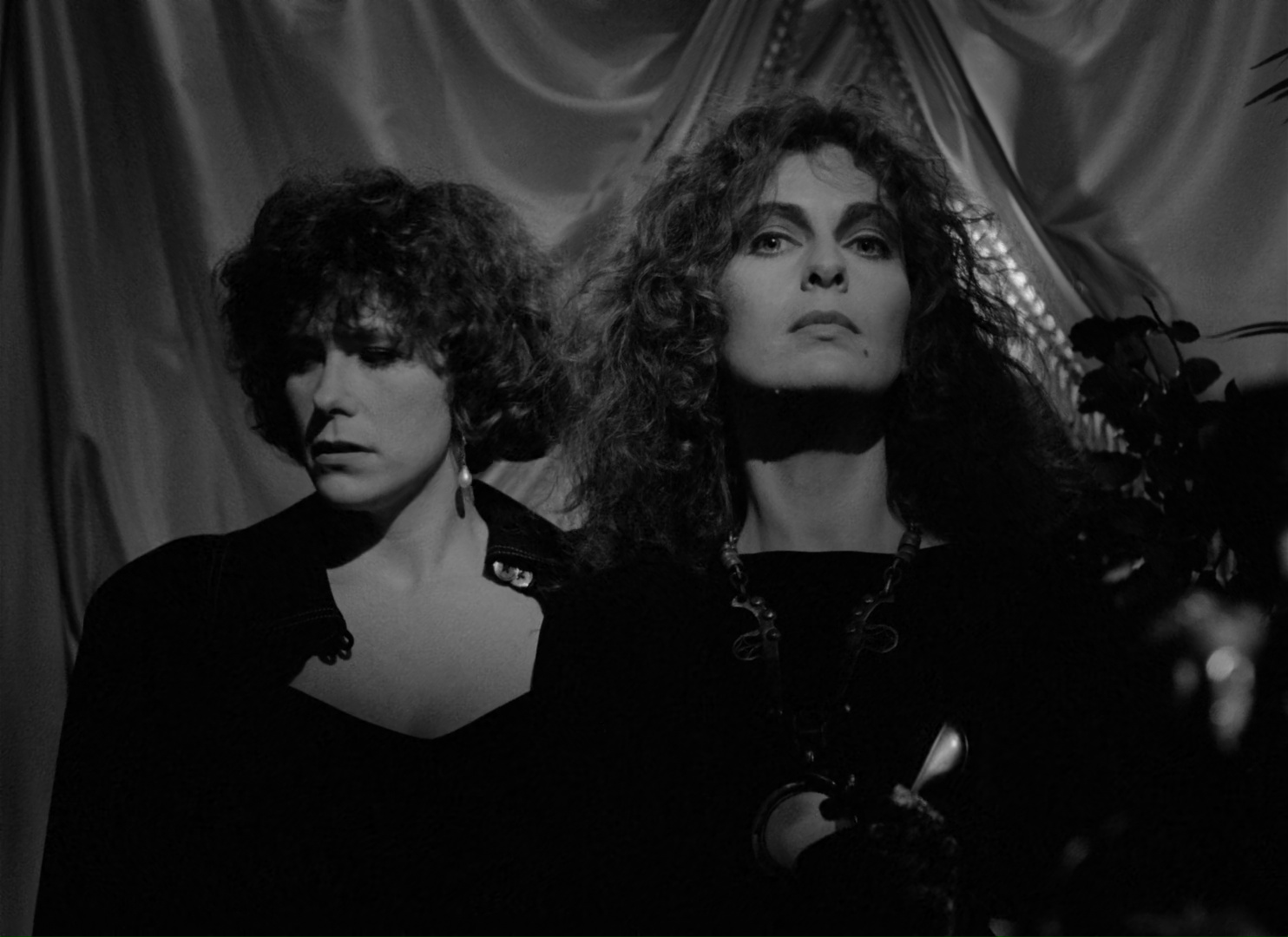
Scarlet Street (Fritz Lang, 1945)

To distance myself from this year’s cinematic tripe, I sought a vintage film. A public domain title from a YouTube channel I subscribe to caught my eye; Fritz Lang’s film noir Scarlet Street (1945). There is a particular satisfaction in experiencing a film for the first time, especially one as old as Scarlet Street, which exceeds all expectations and predictions. Given the film’s focus on deception, it is ironic that it actually fooled me.

Chris Cross (Edward G. Robinson) is a middle-aged dreamer whose life feels unfulfilled. He would rather be a fine art painter than a cashier. His boss’s affair with a young woman further exacerbates his drudgery. He is also burdened by his domineering wife Adele (Rosalind Ivan) who idolises her late husband and is more interested in her radio show The Happy Household Hour. Returning home from a formal dinner party, Chris accidentally knocks out a mugger with his umbrella while rescuing Katherine ‘Kitty’ March (Joan Bennet*). Unbeknownst to Chris, the mugger is Kitty’s boyfriend Johnny Prince (Dan Duryea) who she conceals from him after persuading him not to report the attack to the police. Kitty presumes Chris is wealthy given his formal attire. She is also aware of his gullibility and sees potential in charming some money out of him. The hustle is set.

Edward G. Robinson portrays Chris Cross, a man experiencing a mid-life crisis, with remarkable authenticity. The character was already diminished to an impotent individual well before succumbing to the influence of Bennet’s femme fatale. His unhappy marriage has him reduced to doing all the domestic work in the home. To keep out of Adele's way, he's forced to do his weekend painting in the bathroom. In a notable scene, Chris is depicted wearing an impractical frilly apron as he carves liver for dinner. At that moment, Adele enters and interrogates him about his relationship with Kitty. Is his affair with Kitty rumbled? The camera zooms in on him as he stares at the knife in his hand. Robinson’s expression conveys the turmoil within his mind.

Similarly, Joan Bennet’s Kitty is another unfortunate individual; despite her deceitful nature she remains a victim. She is constantly abused by Johnny and her money is frequently stolen from her. Her appearance is merely a tool for her boyfriend to exploit on gullible men. Yet she is hopelessly in love with him, even addicted to his influence. Her cruel control over Chris is a reversal of her relationship with Johnny. Consequently, selling Chris’s lucrative paintings, even taking credit for them, highlights her indifference towards the hapless cashier. In the ultimate act of domination, when Chris asks her to paint her, she hands him a bottle of nail polish and raises her foot. “Paint me, Chris!" Obligingly, he stoops to one knee and paints her toes. Like a cat with cream, she declares “They’ll be masterpieces.” In that moment I both admired Joan Bennet’s performance and wished for a fitting consequence for her character.

Dan Duryea’s portrayal of Johnny Prince should not be underestimated. His dominance over Kitty and dependency on money completes the ménage à trois of deception. Kitty is thus a tool for him to exploit. However, he is intelligent enough to be aware that Chris is the golden goose in the love triangle. Without him there is no fancy pad, fast car and wads of cash. Duryea’s conman is a compelling character. Initially he pretends to be a boyfriend of Kitty’s friend Millie Ray (Margaret Lindsay) but Chris has his suspicions. These are proven correct when he encounters Kitty and Johnny in a loving embrace which effectively triggers the film’s chilling direction.

Scarlet Street was not the first adaptation of Georges de La Fouchardière’s 1929 novel La Chienne (translating to English as The Bitch). That honour would go to the French dramatist André Mouëzy-Éon’s 1930 stage play. Jean Renoir would adapt it for film the following year. Scarlet Street was a reunion for its three main actors and director, as they had all worked together the previous year on The Woman in the Window (1944). Scarlet Street shares many similarities with its earlier French counterpart, although it had to adhere to the Hays Code at the time. Consequently, the professions of its two con artists were made considerably more vague including Edward G. Robinson’s. The film was still banned in some states. Having recently watched Renoir’s film, I find Scarlet Street considerably superior. 

The subplot involving Adele’s first husband is a notable element of Renoir’s La Chienne that surpasses Lang’s remake. It is less awkwardly introduced in Renoir’s film. However, this is not sufficient reason to choose it over Scarlet Street. Lang’s film is superior in every other department; better direction, superior acting, beautifully photographed scenes and no jarring time jumps. Furthermore, Lang draws upon his German Expressionist roots in the final ten minutes, veering into psychological horror territory. This is surprisingly downbeat given the era and beyond the black comedy of Renoir's original. In conclusion, only the most pretentious of cinephiles would opt for La Chienne over Scarlet Street. The cinematic equivalent of someone preferring Bob Dylan’s All Along the Watchtower over Jimi Hendrix’s superior cover.

Scarlet Street is a highly engaging film noir from Fritz Lang. It shifts between comedy and melodrama at times before concluding in Poe-esque horror. A cautionary morality tale at its core, it features a particularly early scene where the superstitious Cross is the third to have his cigar lit with the same match. Despite crossing his fingers, it spells doom for all of Lang’s characters. While one might escape justice, no one escapes their fate. An excellent film.

 *Didn't realise Joan Bennet was Madame Blanc in Dario Argento's Suspiria (1977) until now.

Monday, February 24, 2025

Guns Don't Kill People, Cowgirls Do

Gun Crazy (Joseph H. Lewis, 1950)

Went into Joseph H. Lewis's crime thriller largely oblivious to its prestigious film noir reputation. A status posthumously given long after its initial flop. Gun Crazy (AKA Deadly is the Female, 1950), a B-movie from gambling siblings turned film producers the King Brothers, would eventually be discovered by cinephiles as a subversive indie film that was ahead of its time. I honestly thought it was going to be more of an exploitation offering, along the lines of The Violent Years (1956), to be perfectly honest.

Preceding with the young, formative years of one Barton "Bart" Tare, Gun Crazy depicts various instances where the young lad has a more than keen obsession with guns. This unhealthy interest leads to him smashing the window of a gun store to steal a hand gun. Caught by the law, he's placed on trial. Both his sister and friends recollect moments where young Bart had an aversion for killing. From feeling repulsed with himself after shooting a chick with a bb gun, to refusing to kill a mountain lion caught in his sights at the behest of his friends. Nevertheless, the kid is sent to a reform school and subsequently joins the military teaching marksmanship.

Now an adult, Bart (John Dall) meets up with his old friends and they visit a travelling carnival. It's there where he meets trickshot cowgirl Annie Laurie Starr (Peggy Cummins). It's an instant attraction between the two. The sexual chemistry between the pair as they show off their gun skills, putting each other's lives at dangerous risk, is off the hook. For anyone with an above room temperature IQ, it's plainly obvious Annie is a nutcase and in the Danger Zone. Nevertheless, Bart briefly winds up working at the same carnival to be with Annie and to earn a dollar. It's there where the sideshow clown, Bluey Bluey, lays the most profound pearls of wisdom which go unnoticed by Bart:

Bluey Bluey: It's just that some guys are born smart about women and some guys are born dumb.
Bart Tare: Some guys are born clowns.
Bluey Bluey: You were born dumb. 
 
After the gun loving lovebirds quit the carnival life and get hitched, it's not long where Annie’s expensive tastes leave them hungry and broke. And thus, a series of robberies and heists turns the newlyweds into America's most wanted outlaws.

Adapted from MacKinlay Kantor's short story of the same name, the screen play would be given the script doctor treatment by the black listed communist Dalton Trumbo (credited as Millard Kaufman). Trumbo would turn Kantor's story into a Bonnie and Clyde style tale, laden with sexual symbolism and plenty of gun toting violence. What's also noteworthy about the film's writing is how it differentiates the two characters' codas despite their obvious love for firearms. Bart may be an expert crack shot, but is awkwardly uncomfortable in committing any potential harm to anyone throughout the story. Meanwhile, Annie lacks any real kind of moral compass to keep her head straight; killing anyone who might piss her off or obstruct her. Not only a femme fatale, but an actual psychopath. This obviously results in a destructive path for the pair. Utimately leading to a thrilling and surreal finale set around a misty swamp, which had me thinking the pair were in Heaven for a split second.

Other than its sexually suggestive content, which must have drawn some controversy for its time, what makes Gun Crazy so revolutionary are some of its innovative filming techniques. The most obvious being the incredible long take shot in the back seat of our protagonists' car, before and after a bank robbery. The scene was shot with a camera mounted on a horse saddle and moved on a greased plank of wood. A makeshift steady cam. The viewer becoming an unwitting accomplice to the off-screen robbery. This ingenious scene was a result of not having the budget nor the time to film inside a bank setting. A great example of the humble B-movie creating cinematic gold.

Perhaps an overly familiar crime saga seventy-five years later, but it did pave the way for other outlaw couples in film. Breathless (1960) by the French New Wave ponce Jean Luc Goddard is a notable example. Both films feature doomed love stories and film making innovations. I wonder if Peggy Cummins's beret was what sealed the deal for the overrated auteur. Jim McBride's superior 1983 remake would reference Gun Crazy by having its two lovebirds hide from the law inside a cinema screening the film noir.

Always feel compelled in rooting for the underdog in most films. In the case of Gun Crazy, it's not only applicable for its outlaw couple running from the law and their thrilling and tension filled heists, but it's also for its incredibly modern film making style. It definitely deserves its reputation for being ahead of its time. Therefore, Gun Crazy earns the Dada Debaser seal of approval.

Thursday, February 13, 2025

The Slinging Detective

Singapore Sling (Nikos Nikolaidis, 1990)

Preceding the Greek Weird Wave movement, which rose to prominence in the late 2000s, Nikos Nikolaidis's thoroughly depraved Singapore Sling (1990) can be considered as ahead of its time. Ought to add, I've largely found Greek Weird Wave (which turned Yorgos Lanthimos into a popular name amongst the kino massive) a pretentious and farcical movement, thanks to its trademark stilted deliveries and awkward hipster humour. Singapore Sling happens to be something of an outlier in this regard, as it manages to have its own idiosyncratic charm and identity without it being eye-rollingly trying too hard. As a result, it happens to be a rewatchable entry in extreme cinema rather than a one time endurance test.

Singapore Sling, or to use the literal English translation of its original title - The Man Who Loved A Corpse, takes obvious inspiration from Otto Preminger's celebrated noir Laura (1944). Preminger's film has  Dana Andrews's private dick searching for the killer of Gene Tierney's character, before a big twist surfaces later in the movie. Nikolaidis has Singapore Sling, the eponymous, Greek detective searching for his lover Laura. The sleuth stumbles upon a bizarre mother and daughter disposing of a body during a torrential downpour, who might know something about Laura's whereabouts.

Many familiar tropes and cliches associated with film noir are prominent in the film. The most obvious is the titular character being the detective investigating the disappearance of his sweetheart. From the harsh black and white contrast lighting, to Sling's first person narration (albeit in Greek), there's a level of technical understanding for the genre's craft. Without the odd giveaway, such as a very obvious '80s looking turntable, you would be forgiven for mistaking the film as being from a much earlier era. That is of course if depraved movies of the Forties and Fifties were on par with this back then. It's what makes Singapore Sling so anachronistically abstract.

Be warned; Singapore Sling definitely falls under the extreme cinema umbrella. This is a film which isn't shy in showing numerous acts of sexual depravity like BDSM and various bodily fluids. There are wince inducing moments of vomiting during a greedy feast scene, but perhaps the film's piece de resistance is the scene involving a kiwi fruit. Without delving into any graphic detail, you'll never see the fuzzy fruit in the same way again. Ever.

What's intriguing about the film, for me at least, is the relationship between Daughter AKA Laura (Meredyth Herold) and Mother (Michele Valley). Given how intentionally unreliable and contradictory facts and details are presented, you aren't certain if the characters are related, or if it's all role play. This does add another layer to the film, which sends the mind racing into overtime attempting to make sense of the characters.

Performance wise, both Herold and Valley are superbly animated and quirky as the psycho mother and daughter. They are what makes this such a watchable film. Thanassoulis plays it lifelessly deadpan, but there's more to his character as the film progresses. He's plainly not a third wheel in the film's plot. To be fair, Singapore Sling's group psychopathy has a lot in common with Freddie Francis's absolutely stellar Mumsy, Nanny, Sonny & Girly (1970), another film that I adore involving a role playing dysfunctional family.

Definitely not for everyone and obviously one for the sickos. A technically stylish and well crafted film considering how depraved it is from the jump. It's oddly strange how various tropes and cliches associated with film noir are grafted into such a perverse art-house film. This make it all the more audacious. A  transgressive film, and one that's grown on me even more over the years.

Amazingly, Singapore Sling is available to watch for free and uncut on Nikos Nikolaidis's YouTube channel. How it hasn't been taken down by Google, I'll never know. However, I do welcome it being there for any inquisitive film fanatics daring enough to check it out. More recently, Singapore Sling got the lavish boutique Blu-Ray treatment, courtesy of Vinegar Syndrome, which I ended up purchasing for my own film library.

Friday, November 8, 2024

The Most Dangerous Gamin

Dementia (John Parker, 1953/1955)

Your host serendipitously discovered the wonders of John Parker's experimental thriller Dementia (1953/1955) accidentally confusing it with Francis Ford Coppola's Dementia 13 (1963). An unforgivable error to Coppola's stans, but a rewarding fluke for anyone with an appreciation for vintage psychotronic film, regardless. A bizarre, psychological thriller — free of any dialogue — peppered with horror elements, and shot like a stylish film noir. Visually, many parts of it reminded me of Orson Welles' Touch of Evil (1958).

After waking from a nightmare, The Gamin (Adrienne Barrett), a mentally disturbed woman and the film's heroine, wanders around skid row experiencing various surreal encounters with distinguishable nighthawks: The Evil One (Richard Barron), a sleazy pimp introduced multiple times; The Rich Man (Bruno VeSota), the Orson Welles looking sugar daddy; and The Law Enforcer (Ben Roseman), a cop on her trail, who later reappears as her father. These run-ins serve as vignettes showing off the obvious Luis Buñuel's levels of surrealism inherent in the film. A fascinating anomaly in cinema, as despite being such an outlier, its influence is profoundly evident in more celebrated films with a deeply psychological bent. Herk Harvey's Carnival of Souls (1962) and Roman Polanski's Repulsion (1965) share obvious DNA with this lesser seen horror noir.

Despite the absence of any dialogue, Dementia manages to incorporate sound and music in a creatively playful fashion. An eerie score, which would have perfectly complimented the popular science fiction flicks of its era, features a wailing female vocal courtesy of Marnie Nixon that is otherworldly. The result lends to the film's hauntingly, dreamlike atmosphere and surreal visuals. Another highlight in sound is how Shorty Rangers and his Giants' music uniquely syncs into the film. You hear the band's music playing off-screen, and then witness them playing it when The Gamin stumbles upon them in a jazzy night club. Like something the Zucker Brothers might have written for one of their spoof comedies.

The basic gist of the film was the brainchild of Parker's secretary, Adrienne Barrett, relaying an actual dream she had to the director. Not only did it spawn the film, it also managed to get Barrett, an untrained actress, into being cast in the lead role. Incidentally, despite Parker's name being credited as the film's director, according to numerous sources VeSota, alleges to have also co-directed the film (uncredited, however). Dementia was intended to be a short film, but additional scenes kept on being filmed during its production, with the finished version clocking in at just under an hour. Still a short film, regardless.

Symbolism plays heavily in Dementia. A traumatic event from our protagonist's past unfolds via a surreal graveyard scene (easily one of the major highlights from the film). In it, we our heroine's parents; her father feeling frisky, but the mother being unreceptive to his advances. The discarded cigar in an ashtray nearby, representing an adulterous incident and the subsequent ramifications of it, is hugely important to The Gamin's backstory. In a later scene, The Rich Man's stogie becomes a triggering catalyst to events in the present. This is all somewhat of a revelation for a film from the fifties. Granted, dark themes in films from this era were hardly new, just look at Charles Laughton's The Night of the Hunter (1955) for example, but they also had the advantage of smart and nuanced dialogue to get away with various details which might have been deemed inappropriate for its time.

Another fascinating element is William C. Thompson being the cinematographer for the film. The same individual who photographed numerous Edward D. Wood Jr. films also did this. You wouldn't know it, however, as the film looks astonishingly more artistically stylish compared to the B-movie fare he would make before and after (and professional, for that matter). Hence, the visual comparison to Welles' striking aforementioned noir. Amusingly, Dementia was the film Thompson worked on before The Violent Years (1956) — a personal favourite in the canon of juvenile delinquency films.

Although completed in 1953, Dementia languished in limbo for a couple of years, until Parker managed to secure an incredibly limited theatrical release. It would prove to be the one and only film he would make. However, it was later re-released with the alternative title Daughter of Horror (1957); with American TV celebrity, Ed McMahon narrating over it and addressing the lack of dialogue in the original. It's this version of the film where footage of it is playing during the cinema scene from Irvin Yeaworth and Russell Doughton's famous monster flick The Blob (1958); starring the legendary actor, Steve McQueen.

A curious oddity from the 1950s. Dementia's production history is just as strangely fascinating as the contents of the film. A weird anomaly which ought to be recognised by both film historians and genre heads as genuinely being ahead of its time. Although not quite on the same tier as the movies that it inspired, Dementia is unquestionably a remarkable effort given the talents involved, along with it being such a mind blowing discovery. It's an anachronistic film which should appeal to armchair shrinks and anyone interested in surrealist films or vintage B-movies.

Sunday, May 19, 2024

Pulp Friction

Loves Lies Bleeding (Rose Glass, 2024)

As enjoyable as Rose Glass's directorial debut was, Saint Maud (2019) was a smart psychological thriller/horror, but way too depressing to revisit again anytime soon. Her latest film, Love Lies Bleeding (2024), is a lesbian neo noir drawing from various celebrated sources from genre cinema. It also happens to be a far more palatable effort defying the sophormore curse.

Despite its heavy material and themes, Love Lies Bleeding has a darkly comic sense of humour woven within its tapestry. Despite its explicit sexual scenes, it exudes an archaic and simplistic pulp novel vibe which is welcomingly refreshing in modern cinema's convoluted and bloviated story telling. Whilst artistically surreal at times, Love Lies Bleeding is a welcome throwback to the neo-noir thrillers from eighties. Ultimately making this a surprising draw for me this year.


Set in a town in New Mexico, during the late 1980s, Love Lies Bleeding centres around the relationship between gym worker Lou (the piranha-jawed Kirsten Stewart) and body-building drifter Jackie (Katy O'Brian). Lou's circle consists of  her battered housewife sister Beth (Jenna Malone), her repugnantly abusive brother-in-law J.J. (Dave Franco) and her estranged, gun smuggling father Lou Sr. (Ed Harris) The nomadic Jackie appears to have no real ties, until later in the story, and is primarily driven by her obsessive desire to enter a body-building competion in Las Vegas. There's also the annoying Daisy, a young woman romantically pursuing Lou, who plays a more pivotal part as the story progresses.


Stylistially speaking, Love Lies Bleeding is mostly shot with a high contrast venee. It's a tried and tested effort harkening to the neon lit eighties. Simulteonously, it's an integral visual component in modern cinema thanks to throwback thrillers like Drive (2011) and Revenge (2017). If that's not enough, baby blue and hot pink are evidently worn in the film, whilst awful retro hair styles are in hilariously abundant. Pick of the bunch is Ed Harris with side hair extentions, reminding me of Matt Lucas's Andy Pipkin from Little Britain (2003 - 2006).

Glass utilises some choice cuts on the film's soundtrack which really compliment Clint Mansell's original score. A firm favourite is Nona Hendryx's Transformtion. An apt song when considering Jackie's arc in the film. 

The film's surreal Attack of the 50 Foot Woman style finale didn't bother me unlike some folk. Having already been familiar with Glass's prior film, Saint Maud, a WTF? style ending was likely to be on the cards. For what it's worth, the film does place various clues regarding Jackie's sense of reality. Sort of come to expect it with the obvious takes on The Incredible Hulk throughout the film. By comparison, it makes way more sense than Ari Astor's tediously over long, surreal odyssey Beau Is Afraid (2023), relying heavily on its wackiness to maintain interest. The problem with this process, by being so overutilised in a three hour film, it becomes boring. Back to this film review - a more relevant, but minor criticism for Glass's effort is sometimes it loses focus on its supporting characters. Its splicing of gritty thriller with transformative body horror works surprisingly well, but the expository dumps near the third act, make the script feel a little rushed and rough around the edges.

Overall, this was a surprisingly entertaining film and one that made me yearn for more small desert town thrillers in this vein. Glass is two for two for me.

Friday, March 15, 2024

Female Trouble

The Sniper (Edward Dmytryk, 1952)

Always a surprise whenever a film from the past subverts any preconceived notions you hold for a particular era in cinema. Edward Dmytryk's chilling film noir, The Sniper (1952), is one of those types of films. Much like James Landis's The Sadist (1963) being the spiritual predecessor to films like Terence Malick's Badlands (1973) and Oliver Stone's Natural Born Killers (1997), The Sniper's Eddie Miller (Arthur Franz) comes across as a precursor to Norman Bates and Frank Zito.

Dmytryk's thriller largely focuses on its antagonist, a violent misogynist working as a dry cleaning deliverer. Miller is an ace shot with a rifle and ever since his release from a prison psychiactric ward, he's been resisting the urge to pull the trigger on various women who have crossed his path. Here's the interesting thing: he wants to be stopped.

What finally pushes him over the edge and turns him into a killer is when he's friendzoned by a bar musician, Jean Darr (Marie Windsor), who, after asking for a special favour from him regarding an emergency dry clean, scurries him out of her apartment when her boyfriend arrives. This results with one of the most disturbing moments of the film, when she's callously shot in the head after leaving her work.

There isn't a clear cut protagonist in The Sniper to counterbalance Eddie Miller's deranged killings; instead we're provided with various characters who might have played the part if they were give enough screen time. Adolphe Menjou is perhaps the closest to one, however, as the elderly Police Lt. Frank Kafka (I'm not joking). There's also a very late introduction of a young criminal psychiatrist played by Richard Kiley, who hardly gets to do much, other than reveal the film's liberal social message; intervention and reform from a young age.

Given its plot of a serial killer armed with a sniper rifle, and the fact that it's set in San Francisco, I can't help but think that The Sniper must have been an inspiration to Don Siegel's classic seventies thriller Dirty Harry (1971). Obviously, the major differences being the latter features a gigachad protector played by the legendary Clint Eastwood. It also contains a more conservative message; criticising the legal system that protects a suspected menace with its bureaucratic red tape. Dmytryk's takes a far more liberal and compassionate view in this regard.

Genuinely surprised a film with such a dark subject matter would ever be released by a Hollywood studio — particularly Columbia Pictures. What would have been more fitting as a low-budget exploitation film produced by the likes of B-movie legend, George Weiss back in the day, is a highly polished and thoroughly thrilling Stanley Kramer production. Thus, The Sniper is not only an excellent film noir, but a serial killer film which might have been ahead of its time.

Tuesday, March 14, 2023

You Don't Know Jack

Croupier (Mike Hodges, 1998)

I'll preface my thoughts on Mike Hodges' stellar slice of Brit noir, Croupier (technially a British and German co-production) with my personal opinion that the nineties were lean times for both horror and British film in general. The less said about British horror at that time, the better. Thus, when Croupier originally came and went, even after its 2001 re-release attributed to its American success, I put it down as another one of those "critic's film" to avoid at the time. How wrong was I?

Clive Owen plays Jack Manfred, a struggling writer working on his debut book, who, thanks to his estranged father, lands a job working as a croupier in a London casino. Born and raised in a South African casino, Jack has a godly croupier skills. What follows in the film, are a series of events where Jack's personality meshes with his novel's protagonist, Jake. Initially inspired by his corrupt colleague, Matt, played by Press Gang's Paul Reynolds. The film leaves some ambiguity over whether or not the character of Jake comes from a hidden persona within Jack, but it becomes abundantly clear Jack's mental state is far from normal as the film progresses. This is enforced throughout the film by Jack's quotable "hang on tightly, let go lightly", catchprase being repeated throughout the film.

The real charm of Croupier comes from Clive Owen's smug and judgmental voice over. His whole personality exudes that of an individual with a massive superiority complex. Jack is able to read people in the same vein as the cards he deals. Ironincally, despite the film being set in a London casino, the subject matter doesn't focus on gambling, but rather Jack's addiction to seeing people lose. It's fixation for schadenfreude where he describes the casino environment as "the house of addiction". It's not long until he's smoking like a circus chimp and boozing for Britain just to calm his nerves when he's back home. As Jack gradually slips into his Jake persona, he's able to snitch and cheat on his social circle with no remorse whatsoever since it's all in keeping with Jake's character. In this respect, he's psychopathic in nature, and that's what makes him such a compelling character to watch on screen.

There are three women in Jack's life who appear to symbolise important aspects about him: his girlfriend, Marion (Gina McKee), a store detective, acts as his moral compass, infatuated with Jack as  a writer and attempts to mould him into something he's not, like wanting his hair dyed blonde and having him wear a ridiculous boy band hat; his co-worker, Bella (Kate Hardie), mirrors his judgemental and callous evaluation of people; while Jani (Alex Kingston), a fellow South African and the film's damsel in distress, might possibly serve as a window about his past. What's revealling about his relationship with Jani, is it's not a sexual relationship. Even while sharing a bed with her, while at his agent's country home for a weekend, he's doesn't pursue anything.

Jack's world is also really engaging. Much of it is nocturnal; including a bizarre tennis match at night scene. Much of our film protagonist's life is a subterranean existence; living a in a basement flat with iron bars over its windows (which has notable significance at the end of the film), to the sub-level casino decorated with distorted mirrors everywhere (apparently based on the old HMV store on Oxford Street).

Events go positively Lynchian after a casino heist, as Jack's world goes completely off-kilter. Some scenes are surreal; like his chance meeting of a self-proclaimed "white witch" at a restaurant, who happens to own the very car he sold at the start of the film. Fate seems to be the integral theme of the film while simultaneously casting some doubt on whether or not its Jack or Jake who is actually on the receiving end. 

Not many films out there that have had me watching on repeat like this. Croupier impressed me enough that I kept discovering various elements with every viewing. Easily my favourite film discovery so far this year. Too bad it took so long in discovering this gem.

Also, based on his performance in Croupier alone, it should have been Clive Owen cast as Jame Bond instead of Daniel Cragface. What a wasted opportunity.

Croupier (Original Trailer)
Mike Hodges, 1998

Tuesday, January 10, 2023

Worst Movie Accents: Part 3

The Lady from Shangai ("Sharks" Forshadowing scene)
Orson Welles, 1947
 

Considered a deity amongst some fanatical cineaste folk, Orson Welles gave the world Citizen Kane (1941) at the tender age of just twenty-six. That was enough to earn him a free pass with whatever erroenous error he might have commited throughout the rest of his professional career.

Film noir, The Lady from Shanghai (1947) was a side-project for Welles, since he was only obligated with it inorder to raise funds for his musical adaptation of Jules Verne's Around the World in Eighty Days. This level of half-hearted commitment would lead into the film being an expensive and troubled production; not just in terms of causing a shitstorm of problems with Hollywood's workers' union, but with his deteriorating marriage with his onscreen co-star, Rita Hayworth.

Haven't read Sherwood King's If I Die Before I Wake, the film's original source material, to find out whether its protagonist spoke in an Irish accent, but I do know when I hear a terrible one that's on par with Cameron Diaz's godawful accent in Gangs of New York (2002). Welles' accent, while hilarious, genuinely hurts the film as it's hard to appreciate spoken word nuances or pivotal forshadowing, like how he compares his employers to frenzied sharks. Thankfully, the finale isn't hampered by a stereotypical, mock Irish accent that could have come from Warwick Davis in the Leprechaun franchise, but artistic eye candy for my film tastes; ending a flawed production on a particular a high note.

The climax, which includes some obvious inspiration from Robert Wiene's The Cabinet of Dr. Caligari (1920), would also be the forbearer to other notable films down the road, including: Bruce Lee's showdown with Han in Enter the Dragon (1973); Scaramanga's contest with Bond in The Man With the Golden Gun (1974); and more recently Col. Parker's Faustian seduction of the King of Rock & Roll in Elvis (2022). The Lady from Shanghai might not be one of Welles' strongest films, but it's abundantly clear, its artistic legacy would be homaged decades later.

The Lady from Shanghai (Funhouse & Hall of Mirrors scenes)
Orson Welles, 1947

Tuesday, March 29, 2022

Viva Las Vargas

Touch of Evil (Orson Welles, 1958)

 
Like a rubberball, Dada Debaser likes to bounce from one film genre to the next. Restricting one's self to just one area feels somewhat crippling in this day and age, especially whenever movie heads' appreciation for film (except musicals and French New Wave - that lot can burn!) comes at the expense of tunnelvision. Cue Dada Debaser's first classic film-noir, Orson Welles' Touch of Evil; a film that appeals to your humble host and moronic film critics alike.
 
Opted to go the same route as I did for Bob Clarke's Black Christmas (1974), since listing an assortment of what I like about the movie, rather than regurgitating the walls of sycophantic text of by the big wigs.

Touch of Evil (Opening Sequence)
(Orson Welles, 1958)

Crane Technique
Whenever Touch of Evil is ever brought up in any film discussion, without fail the long crane shot from the opening sequence will get an obligatory mention; deservedly so, I would add. Huge fan of this immersive opening sequence as it lets all the on screen action do the story telling. A logistical and technical headache made all the more difficult by the border guard actor's repeated bumbling of words. In the end he just silently moved his mouth while his dialogue was dubbed in post-production. Doesn't get mentioned as much, but I'm particularly fond of the infamous driving sequence from the film, too.
 
Shorty Wanna Be a Shutterbug
Other than the aformentioned infamous crane shot, there aren't that many actual overhead shots featured in the film. The majority of it is comprised of dutch angles, extreme close-ups and low shots; one could almost imagine that the film was shot by a crew of munchkins. Along with the highly contrasting black and white lighting, it gives the film a claustrophobic and slighly disorientating feel to it. It's perhaps the biggest reason why the film's somewhat convoluted plot feels completely secondary to me, in comparison to all the amazing visuals that unfold on the screen. An almost Faustian style bargain that would become evident in many of the Italian gialli a few years later down the line.
 

Big Bad Hank
Captain Hank Quinlan, a repugnantly obese, all-star lawman played by the larger than life, Orson Welles is the film's antagonist. As the film moves along, it becomes abundantly clear that the focus isn't really on Mike Vargas (Charlton Heston) and his wife, Sue Vargas (Janet Leigh) being caught up in a border town murder investigation, but about Quinlan's corruption and fall from grace. What's noteworthy about our antogonist, is his corrupt motive isn't financially driven, but his ignoble perversion in the pursuit of justice. This results in innocent individuals framed for crimes they did not commit and cold blooded murder. The line where he reveals his bitterness and ultimately gives his own prejudices away, can't be stressed enough how absolute power corrupts absolutely,"30 years of pounding beats and riding cars, 30 years of dirt and crummy pay. For 30 years, I gave my life to this department. And you allow this foreigner to accuse me! Answer, answer, why do I have to answer him? No sir! I won't take back that badge until the people of this county want me back!" Doubt Quinlan is the first bent lawman portrayed in film, but Welles' character certainly appears as an archetypal template in popular culture in depicting one, for sure. 

Chuck Calling Orson
While completely problematic by today's standards, white actors playing other cultures and races was the norm back then, believe it or not. A major tarnish purported against Touch of Evil in our present era is Charlton Heston playing the film's Mexican protagonist, Miguel/Mike Vargas. Perhaps the biggest criticism is Heston adopting an obvious dark skin complexion, which is hard to defend, but Quinlan's old flame, Tanya, played by Marlene Dietrich, seems remarkably exempt from criticism for pulling the same stunt in the very same picture. Adapted from Whit Masterson's (a pseudonym for the partnership duo of authors, Robert Allison Wade and H. Bill Miller) novel Badge of Evil (1956), Heston's character was originally white and swapped to latino by Welles' screenplay adaptation. Additionally, Susie Vargas was originally latina in Masterson's novel. Kind of opens a can of worms since Akim Tamiroff was Armenian, so where do we go from here? Despite the controversy, Heston, Leigh, Tamiroff and Dietrich delivered great performances, regardless.
 
 
Motel Hell
Goes without saying that Janet Leigh has a poor track record with motels. In this particular instance, being trapped in a remote motel room while being terrorised by a gang of juveniles might be a damn sight better than how she wound up in Hitchcock's Pyscho (1960). However, there's the constant threat of her possibly being drugged and gang raped by juvies, which makes her ordeal seem incredibly distressing. One of those rare moments where I find myself shouting at Janet to get the hell out of there. What I found notably shocking was the female gang leader (Mercedes McCambridge) uttering the chilling line, "I wanna watch". Might be completely alone here, but it's a quote that I believe might have been referenced by Patsy in Mark L. Lester's Class of 1984 (1982). However, the real star at the Miramar Hotel is its mentally impeded night manager, as played by Dennis Weaver. The scene where he freaks out finding a used roach is laugh out loud hilarious.


Bugeye Boo!
The hotel scene where Quinlan kills Uncle Joe Grandi (Akim Tamiroff) while Susie Vargas is lying drugged and unconscious is perhaps my favourite sequence from the film. The music sounds from the club below and the tight kinetic edited framework of Quinlan murdering Grandi while Mrs Vargas is lying in a bed, drugged and unconscious, is cinematic gold to me. All the better once Susie wakes from her slumber and is greeted by the sight of Joe Grandi's dead bulging eyes above her. Kind of commiting cinematic blasphemy since I'm bringing up The Devil with the ping pong eyeballs from Jesús Franco's ridiculously trashy Devil Hunter (1980), but that's what Grandi's corpse reminds me of from that scene.
 
Welcome to the Party, Pal!
Being an unapologetic genre movie fan, the border town location appeals to me greatly: the neon lights; the clubs and bars; loose women and general sleazy vibe, tug at my heart strings like a Jane Austen novel does to hopeless romantics. 
 
 
The Conversation
Finally, there's the tense finale where Vargas is following Quinlan's bugged accomplice into incriminating the dishonourable captain. All the more suspenseful seeing Vargas hauling a big archaic recorder receiver with him under a bridge and stumbling around oil fields to stay in range of the wire tap.
 
Signing off, amongst Welles' directorial pictures that I've seen, I find myself torn between this and the more celebrated Citizen Kane (1941). There's plenty that Touch of Evil has that appeals to me greatly that Citizen Kane does not, since it caters far more to my tastes and sensibilites than any of his other films. It's great to see this film treated far more kindly in retrospect than upon its initial release, although that's far more to do with Universal's meddling with the finished product than any of Welles' doing. Just glad that Welles' original vision for the picture was finally realised decades later.

Dada Debaser Bonus:
Although taking liberties with historical authenticity like the BBC's Peaky Blinders series, one of my favourite scenes from Tim Burton's Ed Wood (1994), is the chance meeting at a bar of Hollywood's "worst director" with its best. The scene where Ed Wood (Johnny Depp) while dressed in drag and Orson Welles (Vincent D’Onofrio) start talking about film making, the pitfalls of the studio system and the reluctance in casting Charlton Heston in Touch of Evil is pure comedy to me. In truth, it was Heston who advised Universal to have Welles direct the film. Nevertheless, no matter how fictitious this scene is, it's still a wonderful moment from one of Burton's better films:
 
Ed Wood (Ed Wood meets Orson Welles Scene)
(Tim Burton, 1994)