Showing posts with label while you were sleeping. Show all posts

Thursday, October 26, 2023

Juvenile Hell: Parts 6 & 7

Two fun-sized reviews in the latest instalment of Dada Debaser's Juvenille Hell series. Admittedly, I'd completely forgotten about continuing them, but having finally watched Matthew Bright's Freeway II: Confessions of Trickbaby (1999) for the first time this month (thank you, Plex!), it's high time I covered both of these twisted adaptations of classic Brothers Grimm fairy tales.

Freeway (Matthew Bright, 1996)

If the nineties was ever a decade of endless possibilites, then believe it or not, a young Reece Witherspoon once became girlboss par excellence as the foul mouthed Vanessa Lutz in the superb nineties gem Freeway (1996).

Co-produced by Oliver Stone, Freeway is comedy crime thriller loosely based on Little Red Riding Hood. Our poorly educated heroine, runs aways from social services after her parents get busted by the cops. This sets her course of action of searching for the grandmother she's never met. After her stolen car breaks down on the freeway, she unknowingly hitches a ride with the notorious I-5 serial killer, played by Kiefer Sutherland; the wolf in this wild tale.

Aside from Witherspoon and Sutherland's strong performances, Matthew Bright's screenplay is a real shining light here. Given it's a contemporary take on Little Red Riding, albeit a bizarre one, you're still never quite sure in what direction the film is headed. Bright's characters look and act like they're the type of guests who would appear on an episode of The Jerry Springer Show. There is of course the breezy pacing, which in turn never leads to a dull moment in the film.

Despite it coming from the nineties, Freeway harkens even further back to less politically correct times and that's probably why this film feels even more anachronistic today than it did originally. This is the true magic of the film.

Hard to believe, but even the "buffons" [sic] that the troll critic Armond White was referring to were correct about Freeway and gave it a glowing review back in the day.


Freeway II: Confessions of a Trickbaby (Mattew Bright, 1999)

Matthew Bright wrote and directed a straight to video follow-up in the tail end of the nineties. Amazingly, Freeway II: Confessions of a Trickbaby (1999) is an even crazier tale; bordering on a lucid nightmare in some areas.

This time around Bright's sequel takes its cue from another of the Brothers Grimm's stories - Hansel and Gretel, where the proverbial breadcrumb trail is replaced with crack rocks. Our protagonist is Crystal, AKA White Girl, played by Natasha Lyonne. Sentenced to a twenty-five year bid by an overzealous judge played by John Landis for a string of burglaries, our heroine is being treated in a juvenile correctional facility to cure her bulimia. With the lax security there, White Girl and her lesbian, serial killer cellmate Cyclona leg it before they're carted off to the belly of the beast.

This is a sequel that has a lot more in common with Oliver Stone's Natural Born Killers (1994) than it does with its predecessor. There's no real connection to Freeway other than a clip from the film appears as a scene on a TV.  Both films do possess common character and plot similarities, however; a lower class and highly independent girl protagonist being the most obvious example. The film itself is a violent odyssey as White Girl and Cyclona escape into Mexico. From there they meet the witch Sister Gomez as played by Vincent Gallo and the film switches into a further gear of insanity.

Various heavy themes are in this film, and depending on your point of view, the levity in their handling can be interpreted as either tone deaf or comically genius. For this blogger, they're very much the latter. For this very reason, I consider the sequel on par to its predecessor.

There were no further films in the Freeway series, but Matthew Bright did continue with his serial killer trend with the unexpectedly funny Ted Bundy (2002), AKA Bundy. It's a film worth discussing about another time on account of it being something the Farrelly brothers might have helmed during the noughties wave of real life serial killer biopics. It's where I first discovered Bright and was left both gobsmacked and weirdly amazed by. Add that film with his aformentioned juvie films, and I'm under the impression he might have been some great American auteur in the making, if he didn't quit the film industry after his two and half hour rom-com, Tiptoes (2002) wasn't butchered by the studio to ninety minutes. Haven't seen it, and I'd rather cross my fingers for Bright's version to resurface one day, but I'm willing to forgo my revulsion for rom-coms and long arsed movies on account of Bright's previous work - and also because Gary Oldman plays a dwarf in it.

Tuesday, July 26, 2022

Don't Fear the Sleeper

Army of Darkness (Original Ending)
(Sam Raimi, 1992)
 

There's nothing out right now that I'm really in a rush to see (except, maybe Baz Luhrmann's Elvis), so it's a good time to take a breather and go over a few films I managed to watch for the first time this year that really impressed me. I slept on these movies too long like Ash Williams in the original Army of Darkness (1992) ending. Therefore, it's time to make amends. Ideally, they deserve a more in-depth look, but that's way too time consuming, so here is a brief run down with my thoughts on them:

Things to Come (William Caemeron Menzies, 1936)


Adapted from H.G. Wells' novel The Shape of Things to Come, this gem of British science fiction was startling accurate with the prediction of another world war at the time. The decades which follow show a catastrophic scale of human destruction.

This Gun for Hire (Frank Tuttle, 1942)


Along with Humphrey Bogart, Alain Delon and Peter Falk, Alan Ladd joins the list of trenchcoat cool. This film noir triumph has Ladd playing a hitman with enough repressed anger in him, you would think he would explode like Yaphet Kotto in Live and Let Die (1973). Amazing chemistry between Alan Ladd and Veronica Lake that it's little wonder they were paired together in a further three films.

Riot in Cell Block 11 (Don Siegel, 1954)


This might be one of the most anti-prison movies I've watched. Siegel blends documentary style footage with fever-pitch tension which results in a gritty prison riot tale. The argument for better conditions seems to be just as relevant today as it was back then. I'm a sucker for prison flicks and it makes me feel even more of a sucker for only just discovering this hard-boiled movie this late.

Passport to Shame (Alvin Rakoff, 1958)


This sordid tale of exploitation and manipulation must have been considered very shocking upon its release. Eddie Constantine and Odile Versois are the latest couple to be caught into the web of deceit by gangster pimp Herbert Lom. Somewhat baffled by how much Lom is drawn to Versois while not giving a damn about a stone cold fox like Diana Dors. Tame by today's standards, it's still a fascinating look at the sleazy side of London in the fifties. Look out for an uncredited Michael Caine cameo.

The Servant (Joseph Losey, 1963)


A deeply, subversive pschological drama which goes beyond the typical social class commentary at the start of the film and derails into a halucinatory conclusion of power and dependancy. Dirk Bogarde and James Fox are superb in this. Kicking myself for discovering this film so late and would probably have ignrored it even longer if not for randomly stumbling upon an article on Edgar Wright's list of films which inspired his film Last Night in Soho (2021).

Malpertuis (Harry Kümel, 1971)


Realistically, a film this hard to find (for me at least), really shouldn't qualify here since I have actively sought it out in the past. Directed by Harry Kümel, the same director who gave us the stylish Daughters of Darkness (1971), this horror fantasy is like a feverish dream, where you're never totally sure what on earth is going on. That might deter some individuals, but it's an intriguing film with enough mesmerising scenes, including Orson Welles barking orders on his death bed to his fam, which keeps a film head like me enthralled throughout.

Malatesta's Carnival of Blood (Christopher Speeth, 1973)


File this under "films I would have discovered earlier if I didn't have to dedicate years of my life trawling through Stephen Thrower's breezeblock of a coffee table tome, 'Nightmare USA' just to find out about it." We're here now anyway. Malatesta's Carnival of Blood is a wonderful film which feels like something George A. Romero would have helmed had he peeped Gloria Katz and Willard Huyck's sleeper classic, Messiah of Evil (1973) while on acid. Been burnt one too many times by z-grade horror from that era, but Christopher Speeth's one and only feature film is a veritable diamond in the rough.

Terminal Island (Stephanie Rothman, 1973)


Covered Terminal Island already, but it's worth repeating just how ahead of its time it was. A real shame it's lumped in with the W.i.P films from that era; since it's a subgenre with a very negative reputation. Few film makers are ever given complete carte blanche in realising what they want and Stephanie Rothman was sadly not one of them, but at least this film feels like an amicable comprimise, in my opinion. On a positive note, at least her films are seen in a more positive light, with a renewed retrospective today.

Black Caesar (Larry Cohen, 1973)


Three reasons why Black Caesar rocks so hard for me: it equally sets the template and formula for the onset of rapsploitation flicks that would come along later like Scarface (1983) did; it's blessed with a classic soundtrack by the legendary James Brown; and last, but not least, Fred Williamson exudes the very definition of cool in this film, but carrying a Mauser pistol like da gawd Silence is ice cold badassery.

The Tough Ones (Umberto Lenzi, 1976)

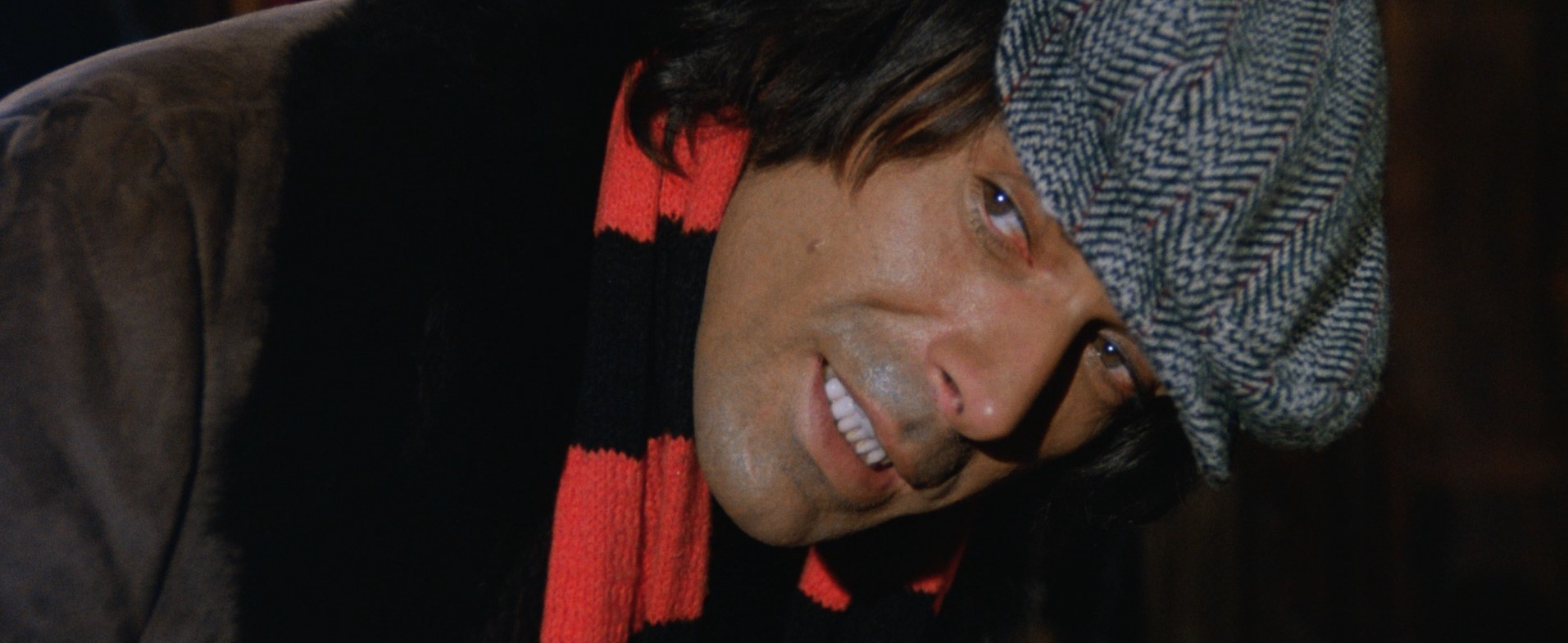
Lenzi's films are usually very hit and miss for me, but the poliziotteschi subgenre appears to be his true calling. Even a desensitised individual like myself has to give The Tough Ones the Dada Debaser seal of approval for ultra violence. It's already an ultimate selling point with Tomas Milian as a hunchback psycho in A.C. Milan colours with a bodycount like Prince, but then you've got Poundland Franco Nero, Maurizio Merli handing out instant justice like he's simultaneously possessed by John Wayne, Charles Bronson and Clint Eastwood. The best poliziotteschi I've seen since Almost Human (1974), and glad I finally caught it.

Angst (Gerald Kargl, 1983)


Shout out to the brother from a Danish mother, CQ for putting me onto this movie back in the day. Regrettably, it took about ten or so years before I finally got off my arse and watched it. This Austrian serial killer drama is an uncomprimising and difficult film to watch. The audience is given a ringside seat as the film's lead, the serial killer K, is released from prison and wreaks sadistic horror upon a poor unsuspecting family. Angst is up there with John McNaughton's Henry: Portrait of a Serial Killer (1986), and I wouldn't be surprised if it inspired the infamous home invasion sequence. A very tough film to watch, but a superb one, nonetheless.

No doubt there will be further discoveries to come along, so I'll probably do a follow-up post near the end of the year.